Wednesday, June 21, 2006

How atypical


Wanna know what makes a good journalist? You could do worse than reading Gabriel Sherman's profile of the Times' Sewell Chan.

Although Chan combines two of my interests--the New York Times and Asian Americans--I've never noticed his byline on any of the metro stories. Which either says something about me, or him.

Byline Beast of N.Y.: Times’ Sewell Chan Racks Up 422 in YearGabriel Sherman in the

Since he debuted in The Times in November 2004—with a contributor’s credit on a story about the lowering of terror-threat levels—Mr. Chan, now 28 years old, has recorded more than 600 credits. He has covered Hurricane Katrina, the transit strike, the Lake George boating disaster and the fine print of the municipal budget.

“He’s a terrific reporter,” said former metro editor Susan Edgerley, who hired Mr. Chan away from The Washington Post. “He’s hugely energetic. He’s curious, smart. He loves coming to work every day. He’s a joy to have in the newsroom.”

At a paper populated by reporters with sharp elbows and brazen ambition, Mr. Chan’s singular, nearly inhuman work ethic stands out. Through the decades, some New York Times reporters have made names for themselves on West 43rd Street with felicitous prose—to say nothing of deft politicking, sartorial flair or heedless use of expense accounts. But Mr. Chan has made himself a legendary Times reporter by reporting for The Times. And reporting, and reporting some more.

Mr. Chan collects reporting credits the way Pete Rose collected base hits: obsessively, with doggedness and hustle, scratching them out where others might bide their time and swing for the fences. They come one after another, and sometimes in flurries of three or four. As of June 20, Mr. Chan had been in the paper one or more times for 10 consecutive weekdays. That followed a streak of 19 weekdays in May.

The No. 2 metro reporter in output, Kareem Fahim, has 323 credits in the past 12 months, 99 fewer than Mr. Chan. The majority of his colleagues have fewer than 200.
Uncredited photo of Chan via Gothamist.

Tuesday, June 20, 2006

As the flag flies


Israeli flavour in Ghana win

The Hindu: Football lovers here were in for a pleasant surprise when Ghana defender John Pantsil waved the Israeli national flag to celebrate the goals scored by his teammates against the Czech Republic at the World Cup.

Pantsil, who plays for Israeli club Hapoel Tel Aviv, pulled out the blue-and-white flag from his socks after the strikes by Asamoah Gyan and Sulley Muntari which saw the 'Black Stars' upset the Czechs 2-0 yesterday.

Sources at Hapoel Tel Aviv told local daily 'Jerusalem Post' that the Ghanaian had promised to perform the act if his team scored in the World Cup. Pentsil is one of three Ghana international squad members who play for Israeli soccer teams.

Israel failed to make it to the World Cup Finals after finishing third in its European qualifying group.

Gyan's second minute score was not only the first by any Ghanaian at World Cup, but the quickest goal of the tournament so far this year and the fastest African goal in World Cup history.

Scenes of ecstasy and jubilation were witnessed in all parts of the West African country when the final whistle blew in Cologne. "The eruption, some senior citizens said, reminded them of when Ghana attained independence in 1957," the 'Accra Daily Mail' said.
Maybe someday Israel's neighbors will allow it to move from the European qualifing group to the Asian group.

Pantsil helps show there is more to life in Israel
Jerusalem Post: What was most impressive about what Pantsil did was the purity of his intentions.

Explaining his actions the defender told one Israeli sports Website: "I love the fans in Israel. I have played at Hapoel and Maccabi Tel Aviv and the fans always made me happy so I wanted to make them happy."

That was it. Pure and simple. ...

There's no doubt that Israel is a state fraught with controversy and problems.

But on Saturday, one Ghanaian showed the whole world there is more to life here.
It's amazing how much this gesture meant to Israelis... the comments attached to the Post story are touching, but also sad. There's a lot of bad about Israel, but no more so than any other country; and there's a lot more good there than in most countries.

Israelis try; they try to make their democracy better, they try to tell their story to the world, they try to get along with their neighbors, they try to find a way out of their death spiral with the Palestinians.

Usually they fail; but as the U.S. is finding out in America, when you're surrounded by people who want to kill you sometimes it's all you can do to restrain your own worst impulses.

World Cup Diary / It's not our celebration
Assaf Gefen in Haaretz: Paintsil's celebratory act was innocent and colorful until it was pasted over with Zionist cliches and became a parody of national pride. Tal Brody can sue over the appropriation of his coinage "We are on the map." What bothers me is the appropriation of anything with a whiff of an Israeli connection as a "national achievement" - shamelessly and unconnected to reality.

Because if we insist on giving an Israeli connection and meaning to Paintsil's celebrations, one could think of some more realistic alternatives. For example Paintsil's fellow countrymen, and other Africans, may not have lifted the Israeli flag but have been working here for years, and are subjected to inhuman treatment from us. Paintsil's partner was no exception - she was deported before being allowed back after someone at Maccabi Tel Aviv made a phone call. Paintsil and other African players receive VIP treatment from Israeli fans, including monkey calls and thrown bananas.

Before we jump on the Ghana bandwagon, we should perhaps stop to think and remember that it isn't our celebration.
Isn't democracy and a (mostly) free press great? You find out all sorts of things; and cheap sentiment usually falls by the wayside.

Ghana Sorry for Israeli Flag Gaffe
IslamOnline.net: Ghana's World Cup team apologized Monday, June 19, after defender John Pantsil waved an Israeli flag to celebrate his team's goals in their match against the Czech Republic.

"It was naive, he was not aware of the consequences of his actions. We apologize to everyone who felt offended by this," Ghana team spokesman Randy Abbey said at the team's training base, reported Agence France-Presse (AFP). ...

Pantsil's flag-waving sparked a barrage of insults and furious reactions across the Arab world, especially in Middle East heavyweight Egypt.

"Egyptians supported the Ghanaian team all the way until the 82nd minute, and regretted it after the Israeli flag (waving)," screamed a bold red headline in the independent daily Al-Masry Al-Yom.

The live commentator on the Arab satellite channel broadcasting all World Cup matches in the region abruptly cut short his trademark "goooaaaaaaal" when Pantsil brought out the flag.

"What are you doing, man?" the bewildered commentator said.

Some Arab papers described 25-year-old Pantsil as a "Mossad agent," others said "an Israeli had paid him to do it."

But the most elaborate theory was offered by the top-selling state-owned daily Al-Ahram.

Prominent sports analyst Hassan El-Mestekawi wrote that many Ghanaian players attend football training camps set up by an Israeli coach who "discovered the treasure of African talent, and abused the poverty of the continent's children" with the ultimate goal of selling them off to European clubs.

Egyptian football fans were equally rattled when the player produced the Israeli flag.

"We were totally supporting Ghana and we were so excited by how well they were doing," Ashraf el-Berri told AFP.

"We were screaming with joy, but the whole room went quiet when Pantsil took out the flag. We didn't really know how to react," he said. ...

Egypt, Jordan and more recently Mauritania are the only Arab countries with full diplomatic ties with Israel
It's interesting how Saddam Hussein dragged his country into the mud, but Anwar Sadat pulled his out. Looks like Ghana needs a leader like Pantsil.

Ghana: The Uproar Over Paintsil's Israeli Flag Waving
Ghanian Chronicle: Ghanaian international, John Paintsil says his act in waving the Israeli flag to acknowledge the cheers from the fans after Ghana's two goals against the Czech Republic last Saturday, was just in appreciation for his fans in Israel and nothing else.

Speaking to The Chronicle, the Hapoel Tel Aviv defender explained that before the said match, he had a passionate prayer seeking a good game and total victory for the nation, believing God was answering his prayers, hence his decision to waive the flag to his fans.

"I looked at the flag and prayed to God for victory and truly God did; so it was a sign of appreciation to my God and fans in Israel".
Best part--his God's probably different than that of most Israelis, but in this case, G*d delivered for both.

Uncredited AP photo of Paintsil via the Jerusalem Post.

Calling in the big guns


Sox pitcher dismissed after miss

Chicago Sun-Times: After watching catcher A.J. Pierzynski get beaned by Rangers starter Vicente Padilla in the second and fourth innings, [Sean] Tracey was brought into the game in the seventh to face Hank Blalock.

According to one Sox source, Tracey also entered the game with specific instructions.
Both benches had received warnings after the second time Pierzynski was used for target practice, and that's why Agustin Montero already was warming up in the bullpen with Tracey on the mound.

Tracey did throw one inside pitch to Blalock, but then he simply pitched to the third baseman and got him out.

That brought Sox manager Ozzie Guillen to the mound and sent Tracey to the dugout.

The explanation offered by Guillen after the game was well thought out but also a big smokescreen. And while Guillen is never one to lie to the media, he also knows the unwritten rule of baseball that states a manager or player never can admit to throwing at an opposing player without serious repercussions from the league office.

"I felt the thing with Tracey was he's not a mop-up man,'' Guillen said. "He's one of our prospects and shouldn't be in the game for mop-up time. I took too long to get Montero ready to go, and that was my mistake.

"It was my fault that Montero wasn't up quick enough. I got caught between leaving Vazquez in the game or not.''

Guillen, however, was caught on camera screaming at someone in the dugout after removing Tracey. When the camera focused on Tracey, he was visibly upset and looked almost on the brink of tears. A Sox source said after the game that Tracey was informed he was being sent back down to Class AAA Charlotte.

"Ozzie went nuts,'' one source said. "He had the ass, big-time.''
You know, there's an analogy here to the U.S. war in Iraq. At some point when the boss tells you to do something that you don't think is right, no matter if that's the code or the way it's always been done, you just don't do it. And take the consequences.

In this case, we already knew Ozzie was nuts--even if he's the best manager the White Sox have had in 87 years.

More proof today...

No Raves for Ozzie's Rants
Mark Kreidler on ESPN.com: Can we all agree that certain words are so potentially hurtful they should be used either rarely or never?

Good. Then let's not call it a suspension. Let's call it an intervention.

C'mon, White Sox, rescue your guy before he goes Archie Bunker on the rest of the world. Ozzie Guillen has already mocked the likes of A-Rod for not being Dominican enough, equated homosexuals with child molesters, ripped into a rookie for not intentionally hitting an opposing player, declared that if any pitcher hit him twice, "I'd be in the hospital or I'd be dead -- but I will fight, I will fight."

With that as the subtext, Guillen's homosexual slur of Chicago Sun-Times columnist Jay Mariotti on Tuesday is less shocking than it is a continuation of a trend that has been gathering momentum -- virtually unchecked -- by the week.

It is the story of a man who became so lionized for speaking his mind that he forgot the part about having one. At some point, Guillen as a refreshing alternative to canned managerial quotes (Hey, no other managers talk like this!) morphed into the bile-spewing elephant in the living room. It isn't as though the White Sox didn't see it coming -- everybody in baseball has seen Guillen on the rage for months, even as no one lifted a hand to check him.

So now's the time. Stop this man before he runs off the rails. Save Guillen from himself by yanking him off the field long enough to get his attention.

This guy just referred to a local writer thusly: "What a piece of [expletive] he is, [expletive] fag."

Any questions? This has nothing to do with Guillen's feud with Mariotti, and everything to do with Guillen's rapidly shrinking view of the world around him.

Suspend him in order to preserve him. It's your move, White Sox.
Photo of Guillen by Ron Vesely via Baseball America.

Monday, June 19, 2006

Step in

Model Homes and Model 'Families'

The Times: Forty miles north of Los Angeles, in an area where hundreds of homes are cropping up among the brushy, treeless hills, several dozen buyers recently found an odd spectacle in a new housing development.

To visitors, at first glance, it was like walking into a domestic scene starring Colin Farrell and Cameron Diaz.

As shoppers stepped through the front door of the largest model home, a barefoot affable man in his 30's shouted hello from the kitchen and offered juice to the buyers' children. His "wife" — slim, blonde and agreeable — pressed them to try some fresh-baked cookies. Their "children," 12 and 14, offered to show the visitors their rooms. A birthday card was propped on the mantel, and a chocolate layer cake with blown-out candles sat on the speckled granite countertop.

In truth, this cheerful family of four was a group of professional actors — paid to show buyers how life could be in the house, which is one of 166 units planned by Centex Homes of Dallas. ...

"I applaud their creativity, and I think it's one of the funniest things I've ever heard," said Annie Pinsker-Brown, who helps sellers add appeal to houses through her company, called Stage to Sell, in Culver City. "We do try to create a warm, lived-in feeling, but this goes to an extreme."

The fundamental principle of staging a house, she said, is to encourage buyers to "mentally move into the home." The standard methods include painting, putting a wood floor in the living area and adding carpeting in the back bedrooms.

Adding actors, she said, "could be a sort of turn-off," and if the staged family did not reflect the family structure of the shoppers, it could limit the number of buyers. She warned that "it makes the home-buying experience a spectacle, and it may work against the final sale of the home."
Only in L.A....

Hmm, 'reflect the family structure of the shoppers', that's a new one. Does that mean no Hispanic, black or Asian American actors need apply?

Unless, of course, it's for show houses in ethnic enclaves.

Image from 1975's Stepford Wives found in various spots online.

Superseeds


The World's Agricultural Legacy Gets A Safe Home

By Rick Weiss in the Washington Post: The high-security vault, almost half the length of a football field, will be carved into a mountain on a remote island above the Arctic Circle. If the looming fences, motion detectors and steel airlock doors are not disincentive enough for anyone hoping to breach the facility's concrete interior, the polar bears roaming outside should help.

The more than 100 nations that have collectively endorsed the vault's construction say it will be the most secure facility of its kind in the world. Given the stakes, they agree, nothing less would do.

Its precious contents? Seeds -- millions and millions of them -- from virtually every variety of food on the planet.

Crop seeds are the source of human sustenance, the product of 10,000 years of selective breeding dating to the dawn of agriculture. The "doomsday vault," as some have come to call it, is to be the ultimate backup in the event of a global catastrophe -- the go-to place after an asteroid hit or nuclear or biowarfare holocaust so that, difficult as those times would be, humankind would not have to start again from scratch.

Once just a dream -- albeit a dark one, attractive only in comparison to the nightmare that would precede its use -- this planetary larder is about to become a reality. Today, on the barren Norwegian outpost of Svalbard, the prime ministers of five nations and a small throng of other officials will lay the cornerstone for what will be, in effect, the Fort Knox of seeds.

"We will have the biological foundation for all of agriculture, which is really saying something," said Cary Fowler, executive secretary of the Global Crop Diversity Trust, the international organization coordinating the vault's creation with the Norwegian government. "It is a stunning achievement, if you think about it, and it would be about as safe as human beings can make it."
I think I'd like this article even more if the reporter/editor/copy desk hadn't inserted so many self-conscious words... vault, looming, catastrophe, holocaust, humankind, throng....

It'd be funny if they came in one day to find a fat polar bear inside.

Oddly enough, the Post posts no photo with the piece.

Image based on Superman promotional poster created by (Canadian) Chad Kerychuk

Look away


An Army of General Lees Charges Into Nashville

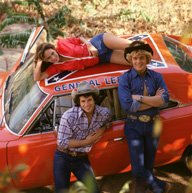
Dave Itzkoff in the Times: ... [W]hat lured Mr. Knotts, and 100,000 other loyal fans, to the Music City Motorplex was DukesFest, a two-day celebration of "The Dukes of Hazzard," the down-home comedy-adventure series that was broadcast on CBS from 1979 to 1985. The annual gathering (held this year on June 3 and 4) is an opportunity for viewers to mingle with the show's stars, trade memorabilia, dress in kitschy T-shirts or simply watch fireworks or eat pork products named for the show's corpulent villain, Boss Hogg. But among this crowd there is a smaller, more dedicated group for whom DukesFest is a kind of mystical calling, a sacred convocation for those who can find transcendence in an event as simple as a car leaping over a ditch.

Their high priest is Ben Jones, the actor who played the character of Cooter Davenport, a garage mechanic, and went on to serve two terms representing Georgia's Fourth District in the United States House of Representatives. After moving to Rappahannock County, Va., Mr. Jones and his wife, Alma, opened a "Dukes"-theme general store called Cooter's Place in the summer of 1999, and staged outdoor festivals there, honoring the series.

"The show had sort of flown under the radar for a long time," Mr. Jones said in a telephone interview. "It's timeless, except for the doofus haircuts. But a lot of people I know have doofus haircuts." ...

Mr. Jones, who has spent many years contemplating the cultural resilience of "The Dukes of Hazzard," offered a few theories about the show's place in the hearts of armchair outlaws. It could be that in politically polarized times, viewers are attracted to depictions of a simpler, idealized America. Or it could be that the Duke boys occupy a point on a proud line of incorruptible heroes that stretches all the way back to Robin Hood.

"Law, as represented by the Sheriff of Nottingham or Boss Hogg, can be corrupt," Mr. Jones said. "But order — that undercurrent of right and wrong, of making the correct moral choice — is there, no matter who the law is."

Or maybe people just like attractive actors and fast cars. "It was like Zen, you know what I'm saying?" Mr. Jones said. "It just was."
Wow--not once does the Times mention that this 'simpler, idealized America' featured a prominently displayed Confederate flag and no black characters (not to mention fans).

Of course, not every Times piece needs to be wide-eyed and aware; they're allowed to write pop culture fluff as much as anyone. As long as they're consistent... I can't imagine the Times attending a gospel music festival that was entirely black and not noting that, let alone a gospel music festival devoted to all-black gospel and leaving it be. White Americans are not neutral or the standard, especially when the article revolves around issues of identity.

I watched the show, and liked it for what it was. I think though it's recently joined the code words that white Christian Americans use to separate us and them--it slips right into place besides other hijacked and imbued things as family values and national security.

And I think anyone who holds it up as a model of what they want this country to be has either been asleep since well before the 80s, or is racist. I for one don't want an America where a couple of good old boys ride wild playing Dixie.
wish I was in de land ob cotton,
Old times dar am not forgotten;
Look away! Look away! Look away! Dixie Land.
In Dixie Land whar I was born in,
Early on one frosty mornin,
Look away! Look away! Look away! Dixie Land. ...

Den I wish I was in Dixie, Hooray! Hooray!
In Dixie Land, I'll took my stand,
To lib an die in Dixie,
Away, Away, Away down south in Dixie,
Away, Away, Away down south in Dixie.
Photo of Bo, Luke, Daisy and the General Lee via Country Music Television.

Sunday, June 18, 2006

Seeing genius


When Picasso and Klee Were Very Young: The Art of Childhood

Leslie Camhi in the Times: ... Decades earlier, when [Paul] Klee had just finished his art studies, he discovered a cache of his own childhood drawings. He described them, in a 1902 letter to his fiancée, as "the most significant" ones he had yet made. Three of those drawings are included in "When We Were Young: New Perspectives on the Art of the Child," an exhibition opening this weekend at the Phillips Collection in Washington.

Do childhood works by artists reveal traces of their future genius? What can the drawings of gifted children teach the viewer about the relationship between art and society? These are among the questions posed by this provocative show and its catalog, one of the first contemporary museum exhibitions to approach children's art from an aesthetic perspective.

"I wanted people to ask themselves to what extent the criteria they use to look at children's drawings is the imposition of an adult eye," said Jonathan Fineberg, a scholar of modern and contemporary art who organized the exhibition. "It's not just that Picasso could render well, because you could teach anybody to do that." The catalog has a startlingly lifelike drawing of a dog by the 5-year-old Edwin Landseer; he grew up to become not Picasso, but a maudlin academic painter.

Picasso's childhood drawing "Bullfight and Pigeons," which is in the show, features realistic-looking birds (a specialty of his father, the painter José Ruiz Blasco). But that's not what makes it remarkable, Mr. Fineberg argues; it's the 9-year-old Picasso's confident, playful scribble that defines the crowd in the corrida's background.

"It's not about skill," Mr. Fineberg said. "It's about unique qualities of seeing. That's what makes Picasso a better artist than Andrew Wyeth. Art is about a novel way of looking at the world."
Hmm, does this mean a genius artist would be able to spot his/her peer easier than the rest of us? Or, can seeing be entirely selfish?

If you came across budding genius, would you be able to tell--or would you just wad it up and throw it away?

I guess it depends on whether genius is always present, whether nascent or mature; or, unnurtured by individuals or unappreciated by society, what could be termed genius simply is odd. If our world was colorblind, would anything by George Seurat hang in museums?

To the extent American society circa 2006 definitely has some level of blinders on, what are we missing? What 'childish' scriblings are habitually dismissed out of hand? How much richer would our lives be if we could see things that don't grab us by the throat?

Or is quiet genius an oxymoron, and not worth the effort by the rest of us? Does everyone quail when they first 'get' Shakespeare, overcome by his density? Is there any genius that is not inherently intimidating at least to those who understand it? Isn't that what genius is--a line etched into sand, before and after, murky and clear, less and more, over which at first we fear to step?

Does the world depend on a replenished supply of geniuses, dragging or uplifting humanity along with him/her over previously unassailable (or unseen) peaks--or does a genius just locally distort time, by a few years/decades/centuries?

Are geniuses indictments of the rest of us?

Image of 9-year-old Picasso's 1890 "Bullfight and Pigeons" and 6-year-old Henri de Toulouse-Lautrec's "Carriage, Cows and Horses" via the Times. No word on who named the works.

Into the woods


The best part of the Times' Iceland's Ring Road: The Ultimate Road Trip are definitely the photos; the text itself is self-indulgent and reads abruptly.

Every so often the Times publishes these astonishing photos in its travel section, photos that are more like paintings and that have spectacular light.

This one brought to mind a painting I saw recently at the Art Institute of Chicago by the Norwegian Harald Sohlberg.

No wonder all these Scandanavians left for America... concentrated beauty of any kind is dangerous and hard on the soul, particularly if it's dark half the year.

Photo of a farmhouse near the Ring Road in Iceland by Jehad Nga for The New York Times.

Image of Harald Sohlberg's 1907 painting Fisherman's Cottage found in various places online.

Seed corn


Obama's Profile Has Democrats Taking Notice

Charles Babington in the Post: [Barack] Obama, a first-term Democratic senator from Illinois, seems to be hitting the right notes these days. During Senate recesses, he has been touring the country at breakneck pace, basking in the sudden fame of a politician turned pop star. Along the way, he has been drawing crowds and campaign cash from Democrats starved for a fresh face and ready to cheer what Obama touts as "a politics of hope instead of a politics of fear."

His office fields more than 300 requests a week for appearances. One Senate Democrat, curious about Obama's charisma, took notes when watching him perform at a recent political event. State parties report breaking fundraising records when Obama is the speaker.

The money he is bringing in for fellow Democrats is shaping up as an important influence on 2006. And the potential Obama is demonstrating as a political performer -- less than two years after his elevation from the Illinois state legislature -- is prompting some colleagues to urge him to turn his attention to 2008 and a race for the presidency. Obama has made plain he is at least listening.
How great is Obama? I like him a lot--but you know, shouldn't every politician be like him? Inspiring, straight-forward, optimistic and connected to the people. It doesn't seem too much to ask, but I guess it is.

As for Obama in '08--sure, if the Democrats want to commit suicide. He's not ready for the job, especially in this day and age. It'd be a miracle if he was.

I'm sure Republicans are praying that a fit of insanity among Democratic voters in Iowa and New Hampshire will propel Obama to the nomination. They can then run McCain--GOP primary voters would rather him than a black man win!--and legitimately play the experience/real adult card, making Obama look foolish and hampering his chances for when he should really run, in 2012.

Besides which, many voters disgusted with Bush and looking for anyone but will draw the line at voting for black man for president. The same prejudice makes me worry that literally the only person who can keep the Democrats out of the White House in 2008 is Hillary. Gore, Kerry, heck, even bring back Jimmy Carter.

So don't do it, Barack, not yet. The Democratic party isn't so bereft it needs to eat its children, neither is it so strong it can make history.

Uncredited photo of Obama in various places online.

At 3rd base, introducing #13, ...


New York Times correction

A chart with the Milestone Watch on the Baseball Spotlight page on Sunday, about Vladimir Guerrero's approaching 1,000 runs batted in, omitted a player who has compiled six seasons with at least 30 home runs, at least 100 R.B.I. and at least a .300 batting average. He is Alex Rodriguez.
Even the stilted wording of the correction is funny.

Talk about being taken for granted.

Uncredited photo of Alex Rodriguez in the Times.

Blogger Dan?

Moving Ahead, Rather Throws Sad Look Back

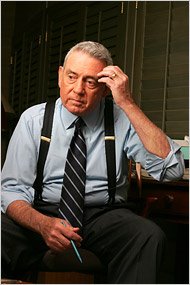
The 74-year-old man with the Mets cap pulled far down on his forehead slid into a booth at a diner on the Upper East Side of Manhattan and ordered a glass of milk without so much as turning a head — so quietly, in fact, that it was hard to believe it was Dan Rather.

In place of the swagger that had served him so well throughout his 44-year career at CBS News was an obvious sadness that his tenure at the network was ticking down to an inglorious end. Mr. Rather complained that since stepping down as anchor of the " CBS Evening News" last year, in the aftermath of a reporting scandal, he had been ill used as a correspondent on "60 Minutes" and had been given virtually nothing at all to do for the previous six weeks.

Among the places he had sought solace, he said on a recent afternoon, was in "Good Night, and Good Luck," George Clooney's homage to Edward R. Murrow and the CBS News of old, a film that Mr. Rather said he had seen five times in theaters, most recently alone.
Rather deserves better than this. I always liked him--while I thought Peter Jennings was the better anchor, I had no doubt Rather was the better person; he may have even been the better journalist, his in-the-field reporting track record was second to none.

In my view historians will record that CBS cravenly seized upon a second-rate reporting mistake, on their watch as much as his, to push him out the door in search of demographically stronger ratings.

He's a real journalist with nothing to lose at this point, still in full possession of the curiousity, drive and experience that made him anchor of CBS News in a time when that was the pinnacle of achievement in television news. Were this a Greek tragedy, Rather will now find a deserving outlet for his talents as CBS and the other broadcast networks spiral to oblivion; maybe he and Ted Koppel can team up and do something online.

File photo from 2004 of Rather by Fred R. Conrad for the Times.

Saturday, June 17, 2006

Church and press


For One Week, a Bronx Cheer Means Cheering for the Borough

Manny Fernandez in the Times: The borough was visited by Pope John Paul II in October 1979, President Jimmy Carter in October 1977 and, quite possibly, Mary, the mother of God, in October 1945, when a 9-year-old boy, Joseph Vitolo, said the Virgin had appeared to him in a vision. Thirty thousand people later crowded the streets outside the boy's home on Villa Avenue for what Life magazine called the Bronx Miracle.
Oh? Mary's the mother of God?

I expect the Times will now be referring without qualification to Mohammed as God's prophet, Moses as the lawgiver, Vishnu as preserver of the universe, and Buddha's teachings as the path to Heaven.

Uncredited painting of Mary found online.

Friday, June 16, 2006

Future race


Love Actually

The Village Voice: For Ken Tanabe, a 28 year old designer of Belgian-Japanese descent, June 12 is sacred. That's the anniversary of the U.S. Supreme Court ruling against laws that would have made his own parents' marriage illegal.

Until 1967, states could ban interracial marriages and even send the bride and groom to prison. In 1959, the Virginia Circuit Court found Richard and Mildred Loving—she's black; he was white—guilty of violating that state's ban. The Lovings were sentenced to one year in jail, which was later suspended on the condition that the couple leave the state and not return for 25 years. They moved to Washington, D.C., and were later vindicated on June 12, 1967, by a landmark U.S. Supreme Court decision. Ruling in Loving v. Virginia, the court struck down all state laws barring interracial marriage and held that denying "this fundamental freedom on so unsupportable a basis as the racial classifications embodied in these statutes" was a violation of the Fourteenth Amendment.

Today, Tanabe has now made it his mission to educate his fellow Americans about the history of miscegenation laws. To that end, he created Loving Day in 2004. Part annual holiday celebrated on the decision's anniversary, part educational website, lovingday.org offers an interactive legal map, real couples' testimonials, short videos celebrating interracial couples, and the courtroom history of key miscegenation laws.
Has there ever been a more appropriately named plaintiff?! I wonder what the Lovings are up to now... what their kids are like.

There's an interesting quote from the judge in the Lovings' original case, via columnist Major Cox:
Judge Basile admonished in his ruling, "Almighty God created the races white, black, yellow, malay and red, and He placed them on separate continents. And, but for the interference with His arrangements, there would be no cause for such marriage."
I wonder what decisions are being handed down today that will be ridiculed four decades down the road... and Justice Scalia wants to stick to what the framers intended!

It's not a coincidence that Tanabe's photo looks like something out of a video game. It's the wave of the future; one plus one makes three. Here's Tanabe's Loving Day website... maybe Hallmark can get behind it.

Tanabe has a really neat interactive map on his site where you can see in what years interracial marriage was illegal in each state. Pennsylvania was the earliest to make it legal, in 1780. Probably for whites/free slaves, and Indians. After that when New Jersey became a state in 1787 it came in with interracial marriage legal; then in 1788 New Hampshire, Connecticut and New York became states with it legal. Vermont joined in 1791 with it legal, then for a long time it was illegal in every other existing and new state, until Massachusetts changed to make it legal in 1843.

Wisconsin bucked the trend of it being illegal in every new state outside the original 13 when it joined in 1848 with it legal; nearby Iowa in 1851 changed to make it legal, a year after California joined with it illegal. Minnesota continued the Upper Midwest trend of joining with it legal in 1858, with bloody Kansas switching in 1859 and New Mexico changing in 1866. Washington state changed in 1868, bringing the total to 13 states legal, 30 illegal.

Illinois changed in 1874, with Rhode Island finally joining all of its neighbors and changing in 1881. Maine held out until 1883 when it changed, along with Michigan. Ohio changed in 1887, but then it was a long time--until 1948!--before the next state made it legal, with California changing, joined in 1951 by Oregon. It's interesting, the map of illegal/legal interracial marriage states at this point looks almost exactly like the Republican/Democratic state maps do today. Only Maryland is illegal, and Kansas and New Mexico are legal. If I were the Democratic nominee in 2008 I'd pour money into these three states.

In 1953 Montana goes legal, followed by North Dakota in 1955, Colorado in 1957, and Nevada and Idaho in 1959, with Hawaii and Alaska coming in free. This means for the first time in America's history a majority of states, 28-22, allow interracial marriage. The South is still all red. New Mexico changes over in 1962, then in 1963 Utah and Nebraska switch. In 1965 Wyoming and Indiana change and make it official: Only in the South is interracial marriage still banned.

And in 1967 the Supreme Court forces those final 17 states to join the rest of us.

As Tanabe says in the accompanying interview:
Prejudice and racism are quite alive and well when it comes to interracial couples. People think it's a preference thing—as in, "I don't care what everyone else does but my daughter is not marrying a black man." Loving Day speaks directly to that.

The more interesting stories are where people are working through their issues. One woman is white, her fiancée's Asian, and her uncle is racist against Asians because he fought in the Korean War. Because he loves his niece, though, he decided he's going to have brunch with her future husband every Sunday until he gets over it. In America, we’re used to the black/white angle when you think racism, not necessarily Asian/white or Native American/white.
Photo of Tanabe by Nicholas Ong in the Voice.

Update: Why uncritical celebration of Loving Day makes no sense

Thursday, June 15, 2006

Do you read me now?

"Screw making the comic strip acceptable for 'them.' I draw this for me and you."
It's all about me: Why e-mails are so easily misunderstood

Christian Science Monitor: In a world where businesses and friends often depend upon e-mail to communicate, scholars want to know if electronic communications convey ideas clearly.

The answer, the professors conclude, is sometimes "no." Though e-mail is a powerful and convenient medium, researchers have identified three major problems. First and foremost, e-mail lacks cues like facial expression and tone of voice. That makes it difficult for recipients to decode meaning well. Second, the prospect of instantaneous communication creates an urgency that pressures e-mailers to think and write quickly, which can lead to carelessness. Finally, the inability to develop personal rapport over e-mail makes relationships fragile in the face of conflict.

In effect, e-mail cannot adequately convey emotion. A recent study by Profs. Justin Kruger of New York University and Nicholas Epley of the University of Chicago focused on how well sarcasm is detected in electronic messages. Their conclusion: Not only do e-mail senders overestimate their ability to communicate feelings, but e-mail recipients also overestimate their ability to correctly decode those feelings.

One reason for this, the business-school professors say, is that people are egocentric. They assume others experience stimuli the same way they do. Also, e-mail lacks body language, tone of voice, and other cues - making it difficult to interpret emotion. ...

E-mail's ambiguity has special implications for minorities and women, because it tends to feed the preconceptions of a recipient. "You sign your e-mail with a name that people can use to make inferences about your ethnicity," says Epley. A misspelling in a black colleague's e-mail may be seen as ignorance, whereas a similar error by a white colleague might be excused as a typo.

If you're vulnerable to this kind of unintentional prejudice, pick up the phone: People are much less likely to prejudge after communicating by phone than they are after receiving an e-mail. Kruger and Epley demonstrated this when they asked 40 women at Cornell to administer a brief interview, 20 by phone and 20 by e-mail. They then asked a third group of 20, the "targets," to answer the phone interviewers' questions. They sent a transcription of the targets' answers to the e-mail interviewers.

The professors then handed each interviewer what they said was a photo of her subject. In reality, each got a picture of either an Asian or an African-American woman (in reality, all were white).

E-mail interviewers who thought the sender was Asian considered her social skills to be poor, while those who believed the sender was black considered her social skills to be excellent. In stark contrast, the difference in perceived sociability almost completely disappeared when interviewer and target had talked on the phone.
There are people out there who still think Asian American women have poor social skills?

That's so weird, considering how overrepresented Asian American women are in journalism and fashion, which aren't exactly fields for shrinking violets.

Maybe these interviewers need to page through Audrey.

Quote and image of Lela Lee and her creation 'Angry Little Asian Girl' from PBS.

Wednesday, June 14, 2006

Listing uplift


Started watching near the end American Film Institute's list of the Most Inspiring Movie of All Time. Kind of a weird topic, they're really running out of excuses for prime-time specials. Juggling with the Stanley Cup finals, currently 3-3 in the 3rd period, home team Carolina could win the Cup over Edmonton tonight.

14-Bridge Over the River Kwai, a great film with big themes that looks at why the little things matter. Marred a bit by knee-jerk national stereotypes--the Japanese are vicious and honor-bound, the Brits are plucky and effectively industrious.

13-Hoosiers, what?! This high? They have to be crazy; it's a nice little movie, but it's too easy and predictable.

12 -Apollo 13, what?! Is this why Ron Howard's all over this special? Another interesting film, but it's not nearly as good as the story it was based on. Tellingly, Walter Cronkite talks about the event, not the film.

11-The Best Years of Our Lives, totally deserving of being on the list. I saw it a while ago, will always remember the surprising bitterness of Fredric March's disabled chacter. People who have this image of today's Hollywood as being gritty and realistic compared to the studio era have never seen all the movies like this that once upon a time made up mainstream film-going.

10-Saving Private Ryan, this is getting ridiculous. Yes, a good film with realistic special effects, but like all of Spielberg's film there's too much triteness in it. If it were made 50 years ago by a no-name it wouldn't be anywhere near the top. And it could've been.

9-Miracle on 34th Street, I think this is a decent film, but never was gaga over it. One of those films I think adults like because they think it captures the magic of childhood. Not really.... Much better is It's a Wonderful Life, which should be #1. With Chariots of Fire and Rocky right there too. [Only American films, so no Chariots, else I'd put it #2].

8-Breaking Away, hmmm, have never seen this or even heard of it before. I guess it's about a bicyclist who's dedicated to his sport.

7-Grapes of Wrath, which I saw in high school and don't remember that well at all. Maybe it's too high up just based on that.... It's hard to judge films like this, they were so influential they lose some of their magic when we watch them now.

Stanley Cup game is approaching unbelievable tension, nothing like playoff sports.

6-E.T., ugh. Are you kidding me? The 6th most inspirational movie ever made? Has anyone ever stood up and cheered at that film? Just a poor choice, I wouldn't put it anywhere on this list. It's not a bad movie, but who's inspired to do what by it?

5-Mr. Smith Goes to Washington. Funny how many of these films you can identify based on 1 second of footage. Have actually never watched this the whole way through, bits and pieces here and there. But I think Jimmmy Stewart is in the top 5 of American actors; also tend to like Frank Capra films.

4-Rocky, a good choice for 4th, glad they didn't give in to cheap sentiment and make it #1. It's actually an underrated movie by intellectuals, I think--it's very well made, despite the easy rah-rahness it's truly emotionally affecting, such a classic film in many ways. Would've been amazing to have seen it in 1976.

Cup game is going to OT... ah, sudden-death, how great is this. I think sports films definitely have a leg up in the most inspirational contest... they have a natural story arc to them, plus we're all familiar with the challenges of sports, either via experience or years of exposure.

War films also tend to be inspirational, nothing better than watching men in the worst of times find their best sides.

I have a bad feeling Braveheart is gonna be near the top of this list, which would be a huge mistake.

3-Schindler's List. My gosh, is Spielberg producing this show? The third most inspirational (American) film of all time? It's the easy 'serious' favorite film for people to put down, but having seen it twice--and having worked at the Holocaust Museum when it came out--I gotta say it's a good film, but with some serious flaws. For one thing, it's always so conscious of its seriousness, always so aware that it's a BIG FILM with a MESSAGE. I think it's also swallowed up by its subject matter. Watching these film clips out of context, it's almost maudlin. This is a great film for a generation raised on MTV, more beloved in memory blinded by easy tears than rewatched for revealing any truths about humanity (takeaway: don't participate in mass murder!)

2-To Kill a Mockingbird, ah, I forgot about this one. Good choice, though; Gregory Peck is of course great in it, so too though is a young Robert Duvall as Boo. I do think, however, that a lot of people like the film not for its complex truths and acting, but because it makes them feel good and right... a film about racism that ends with a white man being paid homage to by the black people up in the balcony.

At any rate, there coincidentally was a great NYTimes book review by Garrison Keillor about a new book that looks at the life of Harper Lee.

If you were going to draw a movie from this book, you'd start on York Avenue in Manhattan on a cold winter night in the late 1950's. Pages of manuscript fluttering out of an apartment window and then a young woman, weeping, picking them up out of the snow. She is an airline ticket clerk and she has been working at her typewriter late at night ever since she came to the city over her parents' objections in 1949. She is on her own. Her childhood pal, Truman, an effeminate boy befriended by the boyish girl, is nearby but out of range, flying high, a heralded young novelist ("Other Voices, Other Rooms") with a Broadway musical in the works. In his wake, she strikes people as dumpy and distant. She perseveres. In November 1956, she walks into an agent's office at 18 East 41st Street with five short stories in hand, and is encouraged. On Christmas Day, at her friends Michael and Joy Brown's town house on East 50th, they present her with a gift, a note — "You have one year off from your job to write whatever you please. Merry Christmas." She is bowled over by their generosity. A year later, she has the beginnings of a novel, "Go Set a Watchman," which becomes "Atticus," which, under the tutelage of a patient editor at Lippincott named Tay Hohoff ("dressed in a business suit with her steel gray hair pulled tightly behind her, . . . short and rail-thin with an aristocratic profile and a voice raspy from cigarettes"), after the cold winter night breakdown, she finishes in the summer of 1959.

One evening in mid-December, she meets Truman at Grand Central and they board the 20th Century Limited for Chicago. He has reserved a pair of roomettes. He's on his way to Garden City, Kan., on assignment for The New Yorker, to write about the murders of four members of a prominent farm family, the Clutters, and he's asked her to help him do the research. They spend a month in Kansas, an odd couple. A short man in a sheepskin coat and moccasins and a long scarf, a rather pushy self-centered New York queer, and a tall gracious Southern woman with a knack for saying the right thing. Their big breakthrough comes on Christmas Day. They're invited for dinner at the home of Cliff Hope, the attorney of the murdered farmer, Herb Clutter. Also present are the detective Alvin Dewey and his wife, Marie. Dewey is coordinating the murder investigation and he had been put off by Truman at first, but he and his wife and the Hopes are literate people with a high regard for writers and there is a bottle of J&B Scotch and Harper Lee is a steady woman in whose presence Truman shines. And thus Dewey becomes their key source, the man who makes "In Cold Blood" possible.

It's the beginning of the time of her life. Her book is done, a big relief, and she is getting intimations of the success to come. A lawyer's daughter, she is on a big murder case. She works hard, takes 150 typewritten pages of careful notes, puts her writerly intelligence at the service of her friend (who will never acknowledge the extent of her help), gets engrossed in the story, feels the thrill of collaboration. She goes back to New York to correct her own galleys, returns to Kansas with Truman for the trial of the killers, then back to New York for the publication of the book on July 11, 1960. She is 34 and in six months she has had her hands on two American classics.
Yeah, she doesn't have the publicity skills of her old friend Truman, but as Garrison notes, my gosh, what a run.

1-It's a Wonderful Life, which I really like. Hey, where's the Sound of Music on this list?! Anyway, this is one of those films that you might think hopelessly hokey, until you sit down and watch it. My favorite scene is Stewart and Donna Reed singing 'Buffalo Gals' late one night in a scene that's a definition of true love.
Buffalo Gals, won't you come out tonight,
Come out tonight, come out tonight.
Buffalo Gals, won't you come out tonight
And dance by the light of the moon.
It is in some ways overly-sentimental, but that's okay; like Bollywood films and indeed most great Hollywood films of the 50s and 60s, before all the knowing irony of the spoiled baby boomers swept in in the 70s, once you suspend your snarkiness and enter the film's world you not only get caught up in it but you also learn and internalize great lessons about humanity.

'Moments of such great blinding truth in that film' says William Macy, and that's exactly it.

Uncredited frame grab of Stewart and Reed in various places online.

Tuesday, June 13, 2006

Et tu


Questions for Tim Russert

The Times: The portrayal of my interview with Deborah Solomon (May 14) was misleading, callous and hurtful. I spoke with Deborah Solomon for more than one hour for what she described as a Mother's Day feature. We spent much of that time talking about my mom. I told her how my mom insisted her four kids sit at the kitchen table doing our homework while she prepared supper. We couldn't trade our pencil for a fork until she had corrected our work. Her lessons of discipline, accountability and preparation were invaluable training for my job as a journalist. I told her of Mom's joy at hearing our parish priest say, "The hand that rocks the cradle rules the world" because it affirmed the reality in our family — that I was truly blessed to have a strong mother and strong father. I told her how my mom would wake me with a soft "Tim, Tim." To me this proved you could be heard without yelling, something I hope is reflected each Sunday on "Meet the Press."

I told Solomon the details of my mom's final hours last August when she died from cancer. All four children were at her bedside. I told Solomon that my mom was a beautiful person, inside and out.

Solomon chose to ignore all this, and instead the interview was selectively edited — an interview entitled "All About My Father," implying I chose to talk about my dad rather than my mom on Mother's Day. She also combined questions in her piece, suggesting I did not offer separate and distinct responses to each of her questions, which, of course, I did.

My mom was a central figure in my life. This was my first Mother's Day without her. Your writer's deliberate mischaracterization of our conversation and her feeble attempt at humor made it a particularly painful day.

Tim Russert
Washington
Right in time for Father's Day....

Probably one of the most blistering responses I've read in the Times' famously feisty book review letters section. And it's got that Russert tone... a certain how dare you, don't you realize I'm holy moral outrage.

I always read Solomon's section, even if sometimes I can't quite believe how tough she is on her subjects. But she's a good journalist--she gets to the core of people in a way that's increasingly rare in our spin-driven society.

When I read her interview with Tim, his voice came through exactly the way I've heard it before, the same way it comes out in this letter. What he said and didn't say squared with my impression of him, which is why I'm especially puzzled at the tone of his letter. This is the way you come across, Tim!

Here's the relevant part of the interview:
You've just gathered their letters into your new book, "Wisdom of Our Fathers." Now that you have heroized fathers, will you ever pen a book about your mother, "Big Betty and Me"?

Big Betty? Actually it was Little Betty.

Since you're fond of recalling the many virtues instilled in you by your father, a retired sanitation worker in Buffalo, can you tell us what your mother taught you?

In the "Big Russ" book, I talked about Father Donovan, our local pastor, who every Mother's Day would say, "The hand that rocks the cradle rules the world."

That's not a story about your mother. It's a story about Father Donovan.

It clearly made an impression on me, because it's something that my mom and I talked about all the time.

You still haven't answered the question of what your mom taught you. What do you do on "Meet the Press" if your guests fail to answer your questions?

It's so interesting. Do I sometimes feel internally like I should lean over and just shake this person and say, "Please answer the question"? Of course I do. But I do not want to make them the least bit sympathetic. For me to inject myself or become personal, I think would probably make the guest very sympathetic, and I don't want to do that.
When I first read it I thought the same thing I do now: There's an awful lot of dodging, a lot of incidental flim flam, a lot of rhetorical tricks.

It's great that Russert rehashes in his letter what he told Solomon about his mother over the rest of an hour-long conversation, and even adds new content. But he doesn't dispute that this is what he said in response to her specific questions.

Of course he said other things at other times--but on his show Tim doesn't quote entire speeches either, just the parts he finds telling. And nothing he says in his letter is at odds with the impression I got from Solomon's edited interview.

Russert's a rough guy--see how gleefully he ambushes guests on his morning show with writings and statements from the archives, he clearly relishes his tough guy image.

There's nothing wrong with that--everyone who comes on his show is a big boy/girl, they know how the game's played and they generally give back as good as they get. If they don't or can't, it can make you wonder about their fitness for their public post.

In this case, I wonder what kind of a journalist publicly rips another one in the fashion Tim goes after Solomon; it's a scorched earth approach that you rarely see outside the political shoutfests. Most journalists in Tim's shoes would've agreed with Deborah's right to disagree.

He had better be damn sure that Solomon, a well-respected veteran, took his words out of context. Just because you spend most of your interview talking about one thing doesn't mean your most telling comments are all buried in that mass.

Tim's a master of spin, as he has to be in order to combat it from his guests. That's what I see here... heck, his letter appears a month after the article, making it feel even more deliberate than anguished.

Photo of Russert by Mackenzie Stroh for the Times.

Sallying forth

A Wall Streeter in Round Rock

The Times: Sallie L. Krawcheck, the chief financial officer of Citigroup, is widely regarded as one of the most powerful women in business, but she has never been a director of a public corporation. That is about to change because Dell Inc., whose annual meeting will be on July 21, has nominated her to its board.

Ms. Krawcheck, who turned 41 in late November, will be more than a decade younger than nine of her fellow Dell directors. But she won't be the youngest.

Michael S. Dell, the onetime wunderkind of the personal computer industry who founded Dell, based in Round Rock, Tex., and is its chairman, is three months younger than Ms. Krawcheck.
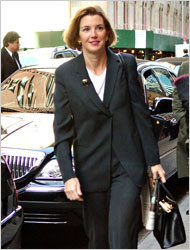
It's interesting, I immediately like Krawcheck when I saw the photo. I suspect most other people do as well; a quick check of Google images confirms it's not just this photo.

Funny that in our day and age so much can still be achieved by a smile and a pleasant demeanor.

Not that that's all there is to Krawcheck, Fortune magazine's 'Most Influential Person Under the Age of 40' in 2003.

Bloomberg News photo of Sallie L. Krawcheck by Jennifer S. Altman in the Times.

Out of the tears

World Cup Tests Iranians' Ability to Have Fun in Public

Michael Slackman in the Times: As Iran's team prepares to step onto the field of the World Cup for only the second time since the Islamic Revolution of 1979, the soccer fever gripping the country reveals many of the pressures reshaping Iranian society. While Iran confronts the West over its nuclear program and its president promotes Holocaust denial, the country is also struggling with something far more fundamental: how to have fun together in public.

It is a challenge that has forced Iranians to try to sort through the intersecting strands of their identity, to confront decades of clerical rule that have emphasized traditions of mourning and to accommodate a population increasingly dominated by young people who are far more aware of the world beyond Iran.

"We do speak about this problem: how can we have a happy society?" said Behrouz Gharibpour, director of the main cultural center in Tehran. "We are in the center of trying to change, to find a good and accepted way to be happy — when we want to be happy."

Soccer, it turns out, has been one of the catalysts propelling that effort.

"As a people, we have this very sad streak in us," said Mansoureh Ettehadieh, a publisher and historian in Tehran. "Most of our music is sad. The Shia color is black." ...

"If they win, all of the people will express their emotions, 100 percent, and there will be no power to prevent them from doing this," said Ali Mudi, 44, as he sat in Laleh Park in Tehran. His friend Ahmed Maghail, 82, said he relished the idea of such a celebration: "All of the happiness and celebrations in my life were before 27 years ago."
How long can a regime last when its people are forced to keep much of life's emotions and experiences bottled up inside?

I guess one answer is it depends on whether the regime changes. China, for example, under the predecessors of its present rules went through as much madness as any modern country has had to experience, certainly more during the course of the 'Great Leap Forward' and Cultural Revolution than Iranians have had to bear.

I wonder if China's experiences then and Iran's now were and are in some ways necessary, a sort of mad cleansing to ensure a break with history. In Iran's case, the Shah--installed and maintained by the U.S.--ran a brutal dictatorship from 1941 to 1979. The mullahs have been in power for only a fraction of that time; but because the Islamic Republic stripped the previously-elite of the wealth and power they had amassed under the Shah's plutocracy, there are squawks of outrage now from them that were wholly absent when Iran's poor was the main victim.

In China's case, everybody suffered pretty much equally in the 60s and 70s as the Communist party tried to figure out how to work through the effects of installing equality in a country that was used to being ruled by others, first by Western powers, than by Japan, than by the rapacious Chiang Kai-shek.

China wound up deciding the only way to deal with its past national humiliation was to become strong economically. I wonder, however, if--given the shackles of its history--its present economic miracle would have occurred had it not been for its self-imposed suffering. Thomas Friedman in The Earth is Flat quotes the mayor of Dalian (a mid-sized for China northern city of 5.5 million) as saying:
My personal feeling is that Chinese youngsters are more ambitious than Japanese or American youngsters in recent years, but I don't think they are ambitious enough, because they are not as ambitious as my generation. Because our generation, before they got into universities and colleges, were sent to distant rural areas and factories and military teams, and went through a very hard time, so in terms of the spirit to overcome and face the hardships, [our generation had to have more ambition] than youngsters nowadays.
It's in some ways Nietzsche's what doesn't kill you and all that, but I think certain countries with specific histories need to go through a 'boot camp' sort of experience, where they're broken down--sometimes in nonsensical, heartless ways because really, how can a society disassemble itself logically--in order to find out what their national soul really is and in order to build a sustainable society.

I'm hopeful Iran will go the same path, and will start its road to recovery by giving up its draining nuclear weapons program in exchange for the U.S. ending its economic embargo. Not sure if the same regime that's dragged the country into this mess will be there to bring them out the other end.

In the meantime, until the pendulumn swings back, the Times' characterization (and it very much is a product of the Times' world view) reminds me of the opening lines of Salman Rushdie's Haroun and the Sea of Stories (which I always recommend as the perfect introduction to this greatest of living authors)
"There was once, in the country of Alifbay, a sad city, the saddest of cities, so ruinously sad that it had forgotten its name. It stood by a mournful sea full of glumfish, which were so miserable to eat that they made people belch with melancholy even though the skies were blue."
Polaris photo of woman at Ayatollah Ruhollah Khomeini's tomb by Newsha Tavakolian for the Times.

Champion's heart


Rafael Nadal blogs on winning the French Open

When the match was over I needed to get into the stands as quickly as I could to hug my family. To me the family is everything and I wanted to hug my uncles, my mother and especially my father. And I will tell you what I told him. I said to my father, “Daddy, thanks for everything,” and we just cried. I guess that's why he didn't want to release me – because he didn’t want people to see that he was crying. It was a special moment.

I got my trophy and when I was having my briefing before getting the trophy I had mentioned to Benito of the ATP that I would talk a lot about Roger, so I did. I gave my speach in Spanish. When in the second sentence I said how great Roger is people were booing. I didn't know what it was. I thought maybe something had happened or maybe they misunderstood the translation. Afterwards we all realized the translator did not say what I said. The crowd thought I was talking about myself. It was just a misunderstanding. I was praising Roger, not myself, and I will always praise Roger because he is a great guy and a great champion. ...

Anyway, to tell the story short, we left the site around 10.45 with all my family waiting in the hotel. We had scheduled to go to the Spanish embassy... that is a tradition to say hi to the ambassador. We got there very late at 11.20, so I have to apologize, as that's not the right time to go into anyone's house. To go to the embassy, that is exciting as people are waiting for you, you have the flags and everything. I got there and we left at midnight and Carlos Costa, my manager, had booked a nice restaurant, Trocadero, with a beautiful view of the Eiffel Tower.

There we had all my family, all my friends who came, all my sponsors we had invited to be there with us. It was great. What did I eat? I had a carpccio salmon and chicken with curry and rice. I was so hungry, you cannot believe it. Really hungry. So I had a lot to eat.

Then after dinner we went to a place to have a couple of drinks and move a little bit the body. But not much as you know I am already in London writing this blog. This last blog.
How long will it be before other athletes start sharing their feelings after big victories on blogs?

In recent history, I would have loved to have read:
-Derek Jeter after the Yankees beat the Braves in 1996
-Tiger Woods after his record Masters win in 1997
-The Russians on the Red Wings after they beat Philadelphia in 1997
-Tom Brady after the Patriots beat the Rams in 2002
-Pete Sampras after he beat Andre Agassi at the U.S. Open in 2002
-Larry Brown or Rasheed Wallace (or Shaq) after the Pistons beat the Lakers in 2004
-Shani Davis after he won the gold medal at the Winter Olympics in 2006

Who knows how many if any of the above would've been as articulate and consistently interesting as Nadal has been--but even a poor blog is better than nothing.

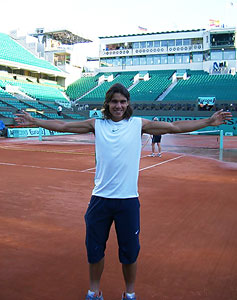
Uncredited photo of Nadal on a quiet French Open Court from his blog.

Old grey gentleman


The opening sentence of this profile of Al Siegal of the Times really grabs you. Amazing that in this day and age people like this still exist--great and even vital at what they do, yet eschewing all hype.

Man Who Knew Plenty: Times’ Siegal Imprinted Invisibly on Newspaper

Tom Scocca in the New York Observer: “There’s nobody who has had more tangible, visible effect on the newspaper you see when you pick up The New York Times every day than Al Siegal,” Craig Whitney said.

Al Siegal—Allan M. Siegal—retired on May 12, shortly after turning 66 (the mandatory masthead retirement age of 65 is slightly elastic). Mr. Whitney, formerly the night news editor, inherited Mr. Siegal’s title as standards editor.

He did not, however, take over Mr. Siegal’s position at the paper. There are many measures of the depths of the influence Mr. Siegal exerted on West 43rd Street, and one of them is this: Mr. Siegal was not assigned to be standards editor; the title of standards editor was assigned to Mr. Siegal.

It was, Mr. Siegal said, a way to formalize the responsibilities that had “stuck to me” through the decades. He served as the in-house authority on language, style, taste, professional ethics and practical newspapering—part small-town judge, part English teacher, part confessor and part oracle. He co-authored the paper”s stylebook and took part in creating its ethics manual, and he helped design the first computer system in the newsroom. When an outsider would call a spokesperson to ask what The Times’ practice was on a particular matter, the spokesperson would call Mr. Siegal and ask him what the paper’s practice was.

“The cliché would be to say that he was the conscience, but he was kind of the conscience,” said Daniel Okrent, the former public editor.
Uncredited photo of Siegal via ASNE interview.