Sunday, April 23, 2006

Bridged


Just finished watching part of PBS' American Experience program on the building of the Golden Gate bridge. There was a great quote from Kevin Starr, Historian of California:

Great works of art encode within themselves messages that are at once transcendent and enigmatic, mysterious. What does the Parthenon mean? What does Beethoven's Ninth mean? What does Hamlet mean? The Golden Gate Bridge means many things. It means the victory of San Francisco over its environment. It means San Francisco remains competitive. It means that people can cross the channel more easily. But it also means something else. It celebrates in a mysterious way man's creativity and the joy and wonder of being on this planet.
If you've ever seen the GGB, you know exactly what Starr means. There's something about its shape and color against the fog that makes you marvel, and keep looking.

One of the best parts of the site is a section about why there were so many big building projects during the 1930s (the GGB was finished in 1937). Historian Andrew J. Dunar says:
Well, actually, planning had begun on many of these projects before the 1930s, and some of this owes ironically to the vision of President Herbert Hoover. Historians now acknowledge his progressive inclinations, and his commitment to counter-cyclical planning and the belief that the nation ought to have a reservoir of big projects in the planning stages that could be executed when the time was right. Programs begun during the Hoover years, such as the Reconstruction Finance Corporation, were forerunners of the New Deal, and years later New Dealer Rexford Tugwell acknowledged that -- even though no one would say so at the time -- "practically the whole New Deal was extrapolated from programs that Hoover started."
Hmm, maybe it's time to reconsider HH, who worked as an engineer. His official White House biography has lots of interesting details (hah, since it's from a government site I can copy it in its entirety and insert comments, it's in the public domain):
Son of a Quaker blacksmith [what?! it's already interesting], Herbert Clark Hoover brought to the Presidency an unparalleled reputation for public service as an engineer, administrator, and humanitarian.

Born in an Iowa village in 1874, he grew up in Oregon. He enrolled at Stanford University when it opened in 1891, graduating as a mining engineer. [Wow, he was in Stanford's first class]

He married his Stanford sweetheart, Lou Henry, and they went to China, where he worked for a private corporation as China's leading engineer. [who says he was China's leading engineer?] In June 1900 the Boxer Rebellion caught the Hoovers in Tientsin. For almost a month the settlement was under heavy fire. While his wife worked in the hospitals, Hoover directed the building of barricades [wow!], and once risked his life rescuing Chinese children. [why not just rescuing children?}

One week before Hoover celebrated his 40th birthday in London, Germany declared war on France, and the American Consul General asked his help in getting stranded tourists home. In six weeks his committee helped 120,000 Americans return to the United States. {Could've used him in New Orleans]. Next Hoover turned to a far more difficult task, to feed Belgium, which had been overrun by the German army.

After the United States entered the war, President Wilson appointed Hoover head of the Food Administration. He succeeded in cutting consumption of foods needed overseas and avoided rationing at home, yet kept the Allies fed.

After the Armistice, Hoover, a member of the Supreme Economic Council and head of the American Relief Administration, organized shipments of food for starving millions in central Europe. He extended aid to famine-stricken Soviet Russia in 1921. When a critic inquired if he was not thus helping Bolshevism, Hoover retorted, "Twenty million people are starving. Whatever their politics, they shall be fed!" [good for HH!]

After capably serving as Secretary of Commerce under Presidents Harding and Coolidge, Hoover became the Republican Presidential nominee in 1928. He said then: "We in America today are nearer to the final triumph over poverty than ever before in the history of any land." [wow, what a great priority for a president to have] His election seemed to ensure prosperity. Yet within months the stock market crashed, and the Nation spiraled downward into depression. [Nation shouldn't be capitalized; what unlucky timing]

After the crash Hoover announced that while he would keep the Federal budget balanced, he would cut taxes and expand public works spending.

In 1931 repercussions from Europe deepened the crisis, even though the President presented to Congress a program asking for creation of the Reconstruction Finance Corporation to aid business, additional help for farmers facing mortgage foreclosures, banking reform, a loan to states for feeding the unemployed, expansion of public works, and drastic governmental economy.

At the same time he reiterated his view that while people must not suffer from hunger and cold, caring for them must be primarily a local and voluntary responsibility. [uh, where did this come from? doesn't fit the facts or tone of the rest of the bio]

His opponents in Congress, who he felt were sabotaging his program for their own political gain, unfairly painted him as a callous and cruel President. Hoover became the scapegoat for the depression and was badly defeated in 1932. In the 1930's he became a powerful critic of the New Deal, warning against tendencies toward statism. [hmm, did a conservative write this bio?]

In 1947 President Truman appointed Hoover to a commission, which elected him chairman, to reorganize the Executive Departments. He was appointed chairman of a similar commission by President Eisenhower in 1953. Many economies resulted from both commissions' recommendations. Over the years, Hoover wrote many articles and books, one of which he was working on when he died at 90 in New York City on October 20, 1964. [astonishing that the son of a Quaker blacksmith died in the modern era]
Going back to the bridge, the site has a poll asking people to rank six of the world's greatest bridges in the order they like. I've been to three of them--GGB, Mackinac Straits bridge, and the George Washington bridge. I'd rank them in that order.

Bridges are so photographable; here are some more.


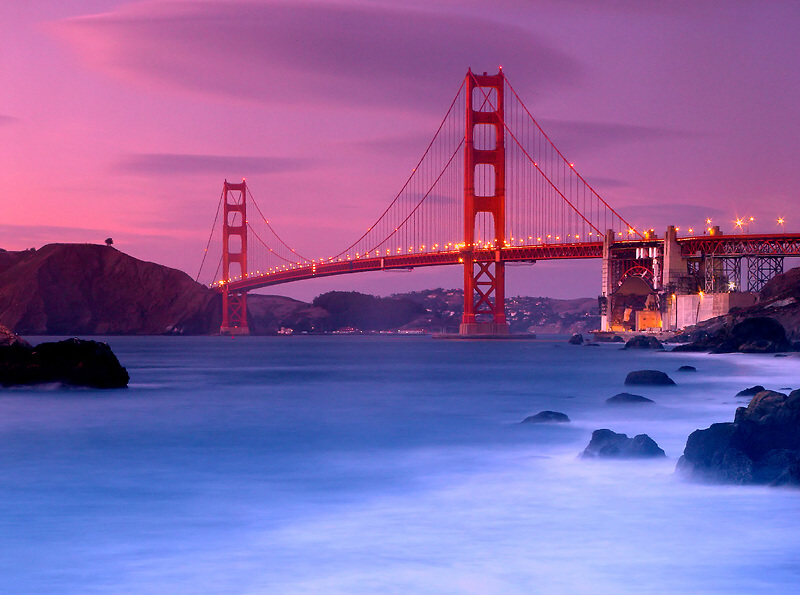
Photo of Golden Gate Bridge from Baker Beach by Buck Cash.

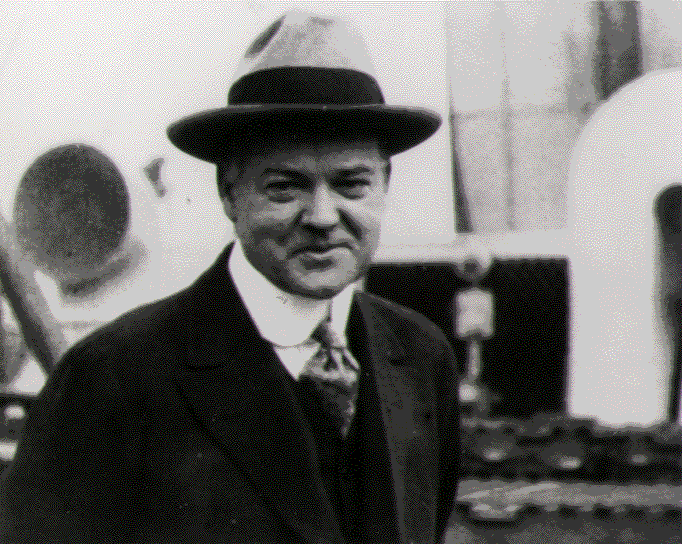
Photo of Herbert Hoover aboard a ship on January 11, 1917 by unknown.

Photo of World's longest bridge, Akashi Kaikyo, linking Kobe and Awaji-shima by Bala Kattappuram.

Unattributed photo of Mackinac Straits bridge from Michigan Department of Transportation.

Photo of Millau Viaduct, designed by Norman Foster and spanning the river Tarn, by Jean-Philippe Arles/ Reuters.

Jhumpa speaks


'Interview' with Jhumpa Lahiri:

Q) The Namesake deals with Indian immigrants in the United States as well as their children. What, in your opinion, distinguishes the experiences of the former from the latter?

A) In a sense, very little. The question of identity is always a difficult one, but especially so for those who are culturally displaced, as immigrants are, or those who grow up in two worlds simultaneously, as is the case for their children. The older I get, the more I am aware that I have somehow inherited a sense of exile from my parents, even though in many ways I am so much more American than they are. In fact, it is still very hard to think of myself as an American. (This is of course complicated by the fact that I was born in London.) I think that for immigrants, the challenges of exile, the loneliness, the constant sense of alienation, the knowledge of and longing for a lost world, are more explicit and distressing than for their children. On the other hand, the problem for the children of immigrants — those with strong ties to their country of origin — is that they feel neither one thing nor the other. This has been my experience, in any case. For example, I never know how to answer the question "Where are you from?" If I say I'm from Rhode Island, people are seldom satisfied. They want to know more, based on things such as my name, my appearance, etc. Alternatively, if I say I'm from India, a place where I was not born and have never lived, this is also inaccurate. It bothers me less now. But it bothered me growing up, the feeling that there was no single place to which I fully belonged.
Lahiri is one of my favorite authors; I impatiently wait for her to publish a third work.

It's interesting to me that she doesn't know how to answer the question, and then that she answers it the way she does. Q-Where are you from? A-Why?

Also, which single place do you fully belong? Wherever you want to.

That's the great thing about being an immigrant or the kid of one--you get to decide. Doesn't matter if you don't feel 100% one way or the other; people in life very rarely feel totally committed to anything. It's okay to feel multiple ways about something; probably healthy, actually, shows you're aware and thoughtful.

Let's not make things more complicated than they are. Compared to billions of people in the world, immigrant kids in the U.S. have it great. Just because others in American society are ignorant, racist or unaware shouldn't define your world, any more than geography did your parents'.

Photo of Jhumpa Lahiri by Marion Ettlinger from Houghton Mifflin.

Saturday, April 22, 2006

Our World, via the Times


It's earth day; here's a quick look at our world.

World Pool
Bracketolitics: The Road to the Final Four: Gregg Easterbrook and Grady White put together a funny NCCA-inspired bracket in the Times; although they wimp out by not picking a championship game (Hillary vs. U.S. military) or winner (ground troops always win).

When Little Girls Grow Up
Condoleezza Rice on PianoThe Times magazine: The talk of Condi vs. Hillary in 2008 sounds a lot less crazy after you read this profile. She's amazing... one of those you can't believe she can do all that she does in so many different areas type people.

One paragraph jumped out at me:

Ms. Rice, not quite 9, was sitting in her father's church on the Sunday morning in 1963 when, two miles away, bombs went off at a Baptist church and four black girls were killed, one of them a childhood playmate of hers. During this period of protests, fire hoses and bombs in Birmingham, she found comfort taking music classes at a local conservatory that had boldly opened its doors to black children. In 1969, the family moved to Denver, and Ms. Rice, having skipped the first and seventh grades, entered the University of Denver at 15 as a music major.
It's a juxtaposition that reminds you it wasn't that long ago when Rice could've been beaten with near-impunity in some parts of this country. Times have changed; not sure everyone has, but if nothing else they're dying off.

Why Bloomberg's a billionaire
Echoes of Lucy
The City Column--Q: When I think of Mayor Bloomberg, I think of a line he occasionally uses: "If you want something done, ask a busy person to do it." That sounds just like him. Did he originate the line?

A. You're going to love this. That aphorism is most commonly attributed to Lucille Ball (1911-1989), another famously organized overachiever. The complete quotation is: "If you want something done, ask a busy person to do it. The more things you do, the more you can do."

But it is doubtful that Lucy originated it. Here is a similar quote from William Hazlitt (1778-1830), a British essayist: "The more we do, the more we can do; the more busy we are the more leisure we have."
Maybe this explains Condi. And people like Bill Clinton, Jeffrey Sachs, Yo Yo Ma, Richard Posner....

Can you Ear Me Now?
Ready for the Red Baron
The Times: Dogs are famously blessed with acute hearing, a trait that serves them well when guarding warehouses or sensing when Kibbles 'n Bits are poured into a bowl. But that hearing may be overwhelmed when a dog is taken aloft in a private plane, as Michele McGuire first observed in 2004. Finally confident that her puppy, Cooper, had outgrown the chew-anything stage, Ms. McGuire, an experienced pilot from Westminster, Md., took him along for a ride in her Cessna. Shortly after takeoff, however, it became obvious that Cooper was having a dreadful time.

"He's a wild thing; he's usually bouncing off the walls," Ms. McGuire said. But the normally rambunctious dog started whimpering, then curled up in a ball at the plane's rear. Cooper's nemesis, she concluded, was engine noise, which can reach ear-splitting levels in the cockpit. If her beloved pet was ever going to enjoy aviation, he would need some way to block out the din.

Ms. McGuire tried stuffing foam earplugs into Cooper's ears, but he quickly resisted the intrusion. Then it dawned on her: if human pilots can wear bulky headsets, why can't dogs? She shared her idea with a friend in North Carolina, a fellow pilot who works as an engineer by day. The two soon began developing Mutt Muffs, an over-the-head hearing protector especially contoured for a dog's skull. ...

Ms. McGuire said she hoped to enlist the aid of an independent testing laboratory to calculate the Mutt Muffs' effectiveness. But such labs are unaccustomed to dealing with products made for animals; because of their lackluster language skills, dogs are unable to indicate when they can hear a sound, and when they can't. "I contacted about five laboratories, and they all scratched their heads and said, 'We'll get back to you,' " Ms. McGuire said. ...

So far, most customers have been pilots. But a few dog lovers who engage in other noisy pursuits have bought Mutt Muffs, too. Ms. McGuire said that one customer was a skeet shooter from Oregon; another, an Alaskan, liked to have his dog ride along in his snow-clearing machine.

Ms. McGuire has also fielded inquiries from less active pet owners. These potential customers, she said, don't want their dogs to enjoy aviation or the outdoors or even snow removal: they just want to prevent their pets from being frightened by thunder.
It's touching how devoted some people are to their dogs, and the lengths to which they'll go to make sure their dogs can share their lives.

Cultural Exchange
Mr. Vengeance
Ian Buruma in the Times magazine: Park Chanwook does not look like a violent man. When he isn't wearing glasses, his soft, round face resembles that of a gentle Tang dynasty Buddha. He speaks quietly and smiles a lot, more like a hip college professor than the director of an ultraviolent revenge trilogy. Pinned on the walls of his office in Seoul, among the movie posters and postcards, are photographs of his wife and 12-year-old daughter. His wife, whom he met at a university film club in the 1980's, reads all his scripts and is his most trusted adviser. Their daughter has seen most of his films. A nice, quiet, reflective family man, then, this 42-year-old director who also happens to be a master of imagery at times so brutal that it is almost unbearable to watch. ...

Earlier, in Park's office, I asked him if violence, even imaginary violence, was perhaps an exaggerated response to this virtual new world, an extreme form of human contact.

Park didn't answer my question immediately, but took his time, screwing up his eyes, working up a coherent answer, and then went off on a political riff on the nature of modern society. "Because of capitalism," he said, "relationships between people and their communities — family, or clan, or region — have largely broken down, especially in Asia." He had told me earlier that compared with filmmakers in the West, Koreans were "more sensitive about the tensions between individuals and society." The characters in his films, he said, were "bound to feel lonely and isolated from the world." That is why he often shows them communicating by e-mail or mobile phones, instead of actually seeing one another. "This puts a distance between people, leading to misunderstandings, which is interesting."

The same could be said of any modern society, but then Park told me a story that showed how much tradition can matter, even in cyberspace: "A young woman, working in our office, fell in love with a man through the Internet. The young man was so taken with her that he not only scrutinized her blog but followed all the links in her blog as well. He traced her family relationships, but also her entire private history, including her boyfriends going back to high-school days. Not only their names, but even their digital pictures came up through the links. In the end, he knew everything about her, without having to hire a detective."

Park continued: "You might find this invasion of privacy a bit scary, but young Koreans like it. It is, in a way, a revival of village life, a revival of community, where everyone knows everything about everyone else." But it is a peculiar community, where human intimacy takes place without physical contact. I returned to my question about violence. "Yes," Park said, "violence is a form of communication, whether good or bad — that isn't the issue. It is symbolic of a kind of human communication."
It's a fascinating profile of an interesting man; Park's one of those world citizens who's doing work that speaks to our civilization as a whole.

I really like his comparison of the Internet to a revival of village life--although it's a bit skewed to think of at first, it's true that privacy is a relatively modern concept, and actually in many parts of our world today it still doesn't exist.

Funny that there are billions of people in the Third World who see as an unbelievable luxury the same privacy that millions of people in the industrialized world think they'd like less of.

Our greatest luxury is the ability to choose delusion, without any real consequences.

The High Life
How Does Your Urban Garden Grow?
Three quarters of a century ago, the High Line was high tech.

The one-and-a-half-mile viaduct that runs from 34th Street to Gansevoort Street on the West Side of Manhattan transformed life on 10th Avenue by getting commercial trains out of the way of horses and pedestrians. But by the 1950's trucks were starting to transport more freight than trains, and in 1980 the High Line shut down for good.

Twenty years later, it had devolved into wildness, a flower-strewn stretch of prairie perched above the newly fashionable streets of the meatpacking district, West Chelsea and Clinton. It was just that wildness that made a certain segment of New York fall madly in love with it, particularly when they learned that Mayor Rudolph W. Giuliani and various Chelsea landlords wanted it razed.

And so the group Friends of the High Line was born, with the aim of preserving that patch of green. "All of a sudden it's like 'Alice in Wonderland,' through the keyhole and you're in a magical place," one supporter explained in a documentary on the group's Web site. "There's New York City all around you and there you are — it's the wheat fields of Kansas, it's an alpine meadow, it's magic."

Edward Norton, the actor, put it this way: "The whole idea that something's been left alone long enough for nature to actually, like, take a foothold in it, and create this green space while no one was paying attention is fantastic to me. I love it."

The group won over artists, big-money donors, movie stars and eventually even politicians to its dreamily impractical goal.

Last Monday the Friends and their friends — including Diane von Furstenberg, Barry Diller, Kevin Bacon, Mr. Norton, Senators Hillary Rodham Clinton and Charles E. Schumer, and Mayor Michael R. Bloomberg — gathered to break ground on a park that will one day span the High Line.
Such great quotes, such a great story. It's too bad we've gotten to the point where it's only through bureaucratic neglect that nature can survive; and if it wasn't for (powerful) people even that's not enough in the end.

Black Peril
Why Is Michael Steele a Republican Candidate?
Times Magazine: It was last spring when Karl Rove called Michael Steele, the lieutenant governor of Maryland, to sell him on running for the Senate, and to close the deal, Rove paused to put President Bush on the phone. As Steele recalls it, the president's adviser said, "Here, the boss wants to talk to you." Steele froze, then demurred. "I went, 'No, no thank you.' I was so stunned that he was going to hand the phone to the president. I said, 'That's all right, we'll have that call later.' I couldn't believe it." Other top Republicans called. Senator Elizabeth Dole. Ken Mehlman, the party chairman. One day Steele's cellphone rang, and Vice President Dick Cheney was on the other end.

Steele is the first African-American elected to statewide office in Maryland, which is usually one of the most reliably Democratic states in the nation. The counties bordering Washington are relentlessly liberal, as is its largest city, Baltimore. Steele lives in Prince George's County, which used to be tobacco plantations and is now the wealthiest majority-black county in the United States and normally a huge trove of Democratic votes. But to a Republican Party intent on securing its ascendancy by building a new base among America's minorities, Maryland looks like a land of opportunity. And a place where Democrats might be caught sleeping.

Open and personable, Steele had a prominent speaking role at the Republican convention in 2004, and by the following spring the Republican hierarchy was trying to coax him into the Senate race. The field was kept clear. Money was promised. It didn't matter that Steele lacked some of the attributes typical of a candidate running for high office. He was not a proven vote-getter, having ridden to victory as the running mate of Robert L. Ehrlich Jr., a popular congressman from outside Baltimore who became the state's first Republican governor elected in 36 years. Steele, who is 47, had no personal fortune to offer up to the cause, no campaign war chest. He had been an associate in a law firm, then left that job to open a consulting firm that struggled.

What Steele had to offer, as a candidate, was personal biography, his inspiring life story: childhood in a poor section of Washington; college at Johns Hopkins in Baltimore; then three years studying for the priesthood at a monastery, where he wore the long white tunic of the Augustinian order before deciding that his call to service lay elsewhere. His mother had worked in a laundry, making the minimum wage; his stepfather drove a limo. His parents weren't educated themselves, but they valued learning and made sure the homework in their household got done. Steele's only sibling is Monica Turner, a Georgetown-educated pediatrician (as well as an ex-wife of Mike Tyson, the former heavyweight champ). ...

Joe Trippi, who is advising Kweisi Mfume, the former congressman and one of the Democrats vying to oppose Steele, paints a sort of developing nightmare for his party. "The Republicans are like the Chinese — they think in terms of like a 50-year plan," Trippi, who was an architect of Howard Dean's 2004 presidential campaign, told me. "Their goal is permanent realignment. What we have in Maryland is a national strategy against a party that is not strategizing at all."
I like Steel after reading the profile; as for comparing the GOP to Beijing, the Chinese would never have stumbled into a debate over immigration as ill-prepared and in as poor a strategic position as the Republicans are.

Laugh Despite It's True
David Letterman, as quoted by the Times:
There was a total eclipse of the sun today. President Bush said that the eclipse proves the unreliability of solar power.


Here's an Idea: Let Everyone Have Ideas
William C. Taylor in the Times: LIKE many top executives, James R. Lavoie and Joseph M. Marino keep a close eye on the stock market. But the two men, co-founders of Rite-Solutions, a software company that builds advanced — and highly classified — command-and-control systems for the Navy, don't worry much about Nasdaq or the New York Stock Exchange.

Instead, they focus on an internal market where any employee can propose that the company acquire a new technology, enter a new business or make an efficiency improvement. These proposals become stocks, complete with ticker symbols, discussion lists and e-mail alerts. Employees buy or sell the stocks, and prices change to reflect the sentiments of the company's engineers, computer scientists and project managers — as well as its marketers, accountants and even the receptionist.

"We're the founders, but we're far from the smartest people here," Mr. Lavoie, the chief executive, said during an interview at Rite-Solutions' headquarters outside Newport, R.I. "At most companies, especially technology companies, the most brilliant insights tend to come from people other than senior management. So we created a marketplace to harvest collective genius." ...

Most companies operate under the assumption that big ideas come from a few big brains: the inspired founder, the eccentric inventor, the visionary boss. But there's a fine line between individual genius and know-it-all arrogance. What happens when rivals become so numerous, when technologies move so quickly, that no corporate honcho can think of everything? Then it's time to invent a less top-down approach to innovation, to make it everybody's business to come up with great ideas.

That's a key lesson behind the rise of open source technology, most notably Linux. A ragtag army of programmers organized into groups, wrote computer code, made the code available for anyone to revise and, by competing and cooperating in a global community, reshaped the market for software. The brilliance of Linux as a model of innovation is that it is powered by the grass-roots brilliance of the thousands of programmers who created it.

According to Tim O'Reilly, the founder and chief executive of O'Reilly Media, the computer book publisher, and an evangelist for open source technologies, creativity is no longer about which companies have the most visionary executives, but who has the most compelling "architecture of participation." That is, which companies make it easy, interesting and rewarding for a wide range of contributors to offer ideas, solve problems and improve products?

At Rite-Solutions, the architecture of participation is both businesslike and playful. Fifty-five stocks are listed on the company's internal market, which is called Mutual Fun. Each stock comes with a detailed description — called an expect-us, as opposed to a prospectus — and begins trading at a price of $10. Every employee gets $10,000 in "opinion money" to allocate among the offerings, and employees signal their enthusiasm by investing in a stock and, better yet, volunteering to work on the project. Volunteers share in the proceeds, in the form of real money, if the stock becomes a product or delivers savings.
Sad that an article that essentially says companies need to make it easier for people at the top to hear good ideas treat the topic as such a find. Duh... this is why companies should have feedback buttons front and center on their website, and in one shape or form in everything customers see.

And why groupthink and office politics need to be fought. As President Bush has learned the hard way.

Odd, too, that the article is titled 'Let'--as if either the ideas won't happen otherwise, or they're not really ideas unless the people at the top are listening.

Given what you hear about the culture of the New York Times, the article should be must-reading internally.

Photo of when Yo-Yo Ma received a National Medal of the Arts in 2002 and requested that Condoleezza Rice accompany him by Larry Downing/Reuters.

Uncredited photo of Cooper from the Times.

Out of the desert


Camel's milk could hit UK shelves

The BBC: Camel's milk could become the latest super food to hit the shelves of health food shops and upmarket retailers.
The United Nations is calling for the milk, which is rich in vitamins B and C and has 10 times more iron than cow's milk, to be sold to the West.

Camel's milk, which is slightly saltier than traditional milk, is drunk widely across the Arab world and is well suited to cheese production. ...

As well as its high mineral and vitamin content, research has suggested that antibodies in camel's milk can help fight diseases like cancer, HIV/Aids Alzheimer's and hepatitis C.

And work is on-going to see whether it can have a role in reducing the effects of diabetes and heart disease.

The UN's food arm, the Food and Agriculture Organisation (FAO), wants producers in countries from Mauritania to Kazakhstan to start selling camel's milk to the West.

It hopes donors and investors will help develop the market.

Meat and dairy expert at the FAO Anthony Bennett said: "The potential is massive. Milk is money."
I've always thought of the camel as one of those magical animals that entire cultures once were absolutely dependant on. Like the Mongolians and their horses, the Greeks and the sheep--Arabs used every part of the camel, and built an entire way of life around it.

Maybe this'll be the magic bullet that helps them join the 21st century.

Uncredited AP photo of camel via BBC.

Friday, April 21, 2006

Lost in translation


China's President Ends U.S. Visit With Yale Speech

John O'Neil in The Times: President Hu Jintao concluded his first trip to the United States with a speech today at Yale University aimed at reassuring Americans about his country's rise. But he made clear that China would remain "focused wholeheartedly" on economic growth and would move only "prudently" to expand political rights. ...

Speaking before an invited audience of about 600 students, faculty and administrators — a sizable portion of whom seemed to understand Mr. Hu's jokes before they were translated — Mr. Hu stressed repeatedly that China remained a poor country despite its rapid economic progress.

Mr. Hu is speaking at President Bush's alma mater, and when Mr. Bush traveled to China earlier this year he spoke at Mr. Hu's alma mater, Tsinghua University. Today, the Chinese represent the largest group of foreign students at Yale, accounting for more than 300 of Yale's 11,000 students. More than 300 undergraduates are taking Chinese language courses, with many more participating in Yale's 80 academic collaborations and exchanges with Chinese universities.
Wow, at a university of thousands, hundreds are taking Chinese--good thing in our world of billions there are billions of Chinese.

Apparently those hundreds don't include the reporters at the Times covering China. Could you imagine if the Times' Paris correspondent didn't speak French?

Then again, whatever problems American reporters have covering China pale besides those the Bush administration faces in dealing with the awakened, and touchy, dragon.
Josph Kahn in the Times: President Bush and China's president, Hu Jintao, pledged to cooperate more closely on fighting nuclear proliferation and reducing trade imbalances on Thursday, but broke no new ground on the most delicate issues that divide the two nations.

Mr. Hu's address was interrupted by a protester, Wenyi Wang, who shouted, "President Bush, make him stop persecuting Falun Gong!" The meeting, the first at the White House between the men since Mr. Hu became China's top leader in 2002, was plagued by gaffes that upended months of painstaking diplomacy over protocol and staging. ...

The occasion was disrupted when a member of the Falun Gong spiritual sect, accredited as a reporter for a sect-run publication to cover the ceremony at the White House, interrupted Mr. Hu's address and upset the elaborate choreography the Chinese delegation had regarded as the most important trophy of Mr. Hu's visit. Screaming, "President Bush, make him stop persecuting Falun Gong," the ethnic Chinese woman, Wenyi Wang, partly drowned out Mr. Hu. She continued shouting for more than a minute before security officers removed her.

Mr. Bush later apologized to Mr. Hu for the incident, White House officials said. But Chinese Foreign Ministry officials traveling with Mr. Hu canceled an afternoon briefing. One delegation member, speaking on condition of anonymity because he was not authorized to discuss the subject publicly, described his superiors as outraged by the breach.

Compounding the gaffe, a White House announcer introducing the national anthems at the same ceremony mistakenly referred to China as the Republic of China, which is the formal name of its archrival, Taiwan. Mainland China is the People's Republic of China. China treats American support for Taiwan, a separately governed island that China claims as its sovereign territory, as the biggest irritant in bilateral relations. Even minuscule changes in the wording of diplomatic statements on the subject are often viewed as transformative on both sides of the Taiwan Strait.
As a sidenote, when the heckling occurred the Times quickly put up an article by its staff that quoted what the heckler said in English, followed by a sentence saying the heckler also said something in Chinese. The Post ran an article by its staff that included an Asian American, and that had a translation of what the heckler said.

What a concept, covering a country with reporters that speak the language!

Photo of Chinese President Hu Jintao at Yale by C.J. Gunther/European Pressphoto Agency.

Wednesday, April 19, 2006

Stripped down


Ah, a Southern white trash-free show... well, except for the opening recap. At this point, actually, I'm fine with whatever one of the five remaining teams wins. Obviously rooting for the hippies to climb outof last, or the black couple, but if in the end frat boys deserve to win, well....

Frat boys take off at 11:54 p.m., fly to Muscat, Oman. Interesting, see how much ugliness we see. Bus doesn't leave visitor's center until 9:00 a.m. J/M leave at like 4:30, what a huge lead; 4:41 a.m. is R/Y, overthinking where the visitor center is. They snipe back and forth over his cursing, she's upset. At least they're talking--but walking separately. Old people at 6:20 a.m., then hippies--ooh, at 8:51, they're going to be on the second bus. So they run across the bridge.

Bus passes the hippies, everyone's laughing. On the 10:00 a.m. bus, not bad. At airport, old people find a flight that arrives at 10:50 p.m. Frats follow the old people, everyone else follows them too. Gulf Air, via Bahrain. Old people showing a tougher side. Hippies by themselves on the bus, they do a hilarious impression of the Southerners, and the other teams that have lost.

They join the group, nobody tells them anything, play dumb. For some reason hippies leave, and take a later flight, SwissAir, via Doha, 11:45. Okay.... Flight may have been full, it's unclear. First flight lands on time, off people run. Very interesting. Into like huge Toyota, off they go. Frat boys find it clean, and pretty. Everyone's marveling at hope beautiful everything is. Gotta go to some park. Hippies find a friend who offers to take them to the park, cool.

Gates don't open till 6:00 am., so they all hang out in parking lot, including late-arriving hippies. R/Y have their discussion in the car, she tells him not to talk to him for the rest of the time. Oh-oh. At least they're talking, I think they'll be fine, as long as they're not eliminated.

Gates open, and it's a foot race. Frats, blacks, hippies, couple, old people. Gotta drive 135 miles to town of Sur, fishing town; find a ferry crossing for the next box. Frats drve first, rest close behind. R/Y are sniping again. Hippies wanna let others pass them. Old people reading the map, they find a sign. Old people now in front. R/Y lost. Hippies and J/M are driving along a dirt road, being led through water by a native, hippies and J/M are grateful. The guy helps old people, frats make fun of him before following him, blacks are waaay behind. Hippies in the lead, another flooded road. Jockey with J/M to see who's going first, then frats join up. And bust through, everyone else follows.

Blacks are guided by same guy, make it through no problem. In Sur they ask for directions, follow frat boys for themost part. Hippies get there first, then J/M, then old people. Camel--load a camel into a pickup truck, then deliver to a Bedouin camp; or Watchtower--search among three watchtowers for a message box, deliver it to a merchant.

Everyone's doing watchtower. Frats show up. Everyone's racing to the watchtowers. Frats doing camel. Talk to the camel, they're actually smart, not following the herd. Hippies get lucky, find message box right away. Then old people are off with them too, they get first boat back. J/M give up, off to do camel. Frats get the camel up, hippies get guide to show them to shop. Hippies even have time to do a sketch of the camel, which J/M have no trouble with really. Frats off driving somewhere, old people and hippies find merchant, old people actually in first right now. 80 miles to Al Hawiya, to oasis for next clue; hippies in second.

Frats are lost or something; Monica is yelling in the back of the pickup, they disagree over where to turn, Joseph's right, in third. Frats are totally lost, and hot in the sun. They finally find the place... still no sign of R/Y. Ah, here they are; do the camel. Frat boy makes fun of her name. She's concerned about the camel, says it doesn't small that bad. They find the place pretty quickly, but are behind by quite a bit.

At the oasis old people somehow show up first; hippies beat them to clue box by a second. Roadblock: gotta dig through 117 sand mounds until they find one of 6 buried dishes, which will be their dinner. It's burning hot, they have a lot of work to do. Monica's having a great time, they show up. This is where late-arriving teams actually have an advantage, assuming someone doesn't get lucky early. Frats show up... they usually have very good luck. It's hot, and dirty. And old man hits dinner first. Then Monica. R/Y seem to be doing bit better. Monica's first to get it out.

Now 150 miles to Jabreen Castle, the pit stop. Old man gets dinner, off they go. Eric finds one; hippy still looking, getting frustrated. And Ray/Yolanda show up. B.J. getting frustrated. Ray tells Yolanda take your time, gotta get a pattern going; she shoots back your momma's got a pattern going. Then finds one, encourages BJ not to give up.

This game is pretty unfair sometimes, hippies made up a lot of time--through things being closed--and now they're falling behind again. And then he finds one, they're pretty stoked; good friendship, Tyler's very positive. Now it's a pure race, and some navigating. Probably non-elim, so it's all cool.

Frats take a shortcut... R/Y snipe again. Nizwa... J/M closing in, old people right behind; where are the frats? J/M get directions, very close. And it's--old people! They freak out; it's pretty amazing, win a trip to Rome. Odd, it gets a lot darker before J/M show. They're not happy. In pitch darkness the frats are driving somewhere. R/Y finish--third, and they're pretty happy; say they've managed to overcome things, need to work stuff out. Frats are totally lost, maybe. Hippies on highway, who's next... frats are depressed--and it's... frats, ugh. Hippies show up last, with stuff on.

But it's a non-elim, so they're still in it. No money. They're kindof crazy, but so cool, with no possessions they say they'll be stronger than ever. And maybe they will. To Australia next.

Photos of BJ and Tyler from Amazing Race website.

Six to join Andrea


Results show, blogging live. I'm sure either Elliott or Ace are out, hope it's Katharine joining them in bottom three and not Paris. Assuming Taylor/Kellie/Chris are untouchable. Car commercial is stupid, bunch of them on billboards. Katharine does have a good look, though.

Dumb Rod Stewart comes out, looking very odd. Has only won one Grammy... it's not quite Stevie Wonder (24 Grammys) or even Kenny Rogers (3 Grammys). He sings a very strange rendition of The Way You Look Tonight, which he wrested away from Katharine. It's just boring, at best.

Next week, Andrea Boccelli?! Wow! The greatest love songs of all time--and he's performing live, this is gonna be great! Until then, they divide people into two groups--Elliott on far side, then Chris, with Paris (yay), then Kellie with Elliott, Ace with Paris and Chris (hmmm), Katharine joins far side. Now where's Taylor going... he's obviously not going anywhere, first person to be safe Ryan says. Then he tells Taylor to go join whichever group he thinks is safe.

I really don't know which to pick. Hard to believe both Elliott and Katharine have jumped over Chris, easier to think Kellie's bad week dragged her down, so there you go I guess. Hope Taylor refuses to play their game and just stays in the middle.

He fakes everyone out by going over to Chris, but then goes back to other group... and it's Chris/Paris/Ace's group. Paris gets to sit down right away, it's weird, leaving Chris and Ace, who Ryan says have become best friends. Simon says he thinks Ace will wind up going home. And it is indeed Ace, who takes it with a big smile.

Bye-bye Ace, will miss ya; can't believe Elliott's still there, too bad Katharine's around.

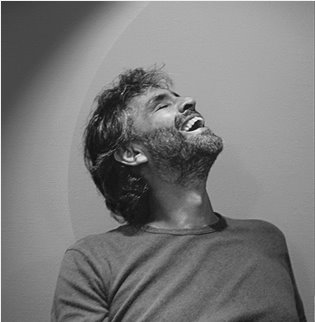
Photo of Andrea Bocelli from his website.

Tuesday, April 18, 2006

Kids go classic


Missed last week's results show due to a taping snafu... first show this year I've missed. Oh well, at least nothing unexpected happened, and my worst fears for Paris didn't come true.

Down to the magnificent (for the most part) seven... doing songs from the 'great American songbook', with the British rocker Rod Stewart. Who's apparently recently starting trying to do the classics (i.e. wow look at how successful Tony Bennett's been).

Odd choice, probably will be an odd night. Shows up to meet idols with his young fiancee and little baby, Alistair. They show a lot of clips of him rehearsing with the kids, guess they've got more time to fill now.

Chris first, What a Wonderful World. Ugh. Stewart is just here for commercial purposes, no real content from him so far, just says Chris is good. He comes out in black vest and pants, white sleeves rolled up, looks like a workman. Pretty good performance though, hard to mess up this song. Nothing so special, a bit schmaltzy actually... longer it goes on, dumber it seems. No passion, just a careful rendition. Would rather have heard the rocking out version of this. The song is so melodic and words are so great that you can't help but like it, but nothing distinctive about it, certainly nowhere near Satchmo's gravelly-edged performance. Randy is like you slayed it, showed the sensitive side and it was the bomb. Paula says you've shown you're in it to win it, outof any mold Simon put you in. Simon says you've listened to me, thought it was a great performance. Well, I disagree; it's seeming less and less to me like the judges are really judging, more and more I feel like they're trying to play a bigger role in the show.

Next, Paris, in very odd red pantsuit, totally like a little girl playing dress-up. Says she got an Easter backet from her mom, went dancing with her friends, and went roller-skating. Doing Foolish Things, Stewart says she has a touch of Billie Holiday. They show her mom crying as she listens to her practice, Rod says she's astounding for 17, has raw emotion. Wow, such a great voice... so controlled, has a great tone to it. And so cool, composed. Wow, it's like her best performance since that amazing first audition, crowd is like going nuts. Randy says it was her greatest night ever, the bomb, so great. Paula is like this is how we all fell in love with you at the audition. Simon is like so stylish, you talk like Minnie Mouse but sing great, thought it was terrific.

Taylor next, Ryan's talking to all of them beforehand now. They talk about Saturday Night Live parodying him, he says he fell out of his chair laughing. Which itself will now be parodied. You Send Me, by Sam Cook... show him with Rod having a great time. Rod says he thinks Taylor's a pretty good mover--from one white boy to another. In classic sportcoat; you know, it's really not that good. I still like Taylor, but feel like he hasn't grown or changed that much, still doing the same thing as from day one. If anything, lost some of his edge, or soulfulness. Just kindof boring, doesn't even dance much till the end, and then it's almost like here's the time when I let loose and dance weird. Randy's like my, my, my... all of you guys are in your element, started okay, liked the end. Paula says you're in that zone to go the distance, ending was superb. Simon says it started and he thought lame cabaret, and then, magic. I again disagree, everyone's got happy talk tonight.

Odd, there's a sign in the audience--Ryan, will you be our brother. Okay.... Elliott next, he's another one who's gone downhill; doing It Had to Be You. Says his mom used to be a professional singer. In black tux-ish, kindof doesn't matter how he does, he'll be out. It's again kindof boring; although Elliott sings it well, they've all been surprisingly well-fitted for this week's theme. Just no wow or anything. Randy says excellent song choice, very nice. Everyone's being so positive. Paula says so many people are capable of winning this year, you're one of them. Simon says it was a good vocal, but tonight more than any other night personality will play a key role, you lacked it so I'm concerned for you. As he should be, Elliott has such an odd, twisted expression on his face.

Kellie next, Rod says twice she has a lot of personality. Bewitched, Bothered and Bewildered. Does she know what the words mean? :-) At the end he tells her congrats, she says well, you took a load off my chest, he says well... everyone laughs. Wow, she's good; in red stain gown, very classic look and again, she's surprisingly good. Very good tone, gets the song right and it's believable. She really has grown more than anyone else. Has such a earnest yet controlled quality. A bit thin in spots, end isn't great either, but last note is well-held. She definitely does more with less; Randy says you look like you know what I'm going to say, what am I going to say. She says I butchered it, puts her hands over her face. Randy's like, well, not quite, but not my favorite song choice, your voice was weak and you were ahead of music. Paula praises her clothes. Simon says it's almost like someone else picked it for you, it wasn't great. Kellie says she agrees, makes such a cute sad face, she'll probably get more votes than ever tonight.

Ace next, singing That's All, which he calls a fun political song. Huh? Kindof hard to understand him, for some reason. He says while he was singing he kept looking at Rod for approval, but he was blank-faced. At the end Rod says it was fantastic, nothing to say but it was brilliant. Yeah, Rod's so astute. Wow, he's got his hair pulled back, in classic suit. He's a bit over-eager, but sings the song well. Very smooth, throws in a falsetto toward the end that doesn't quite work, but he sells the song well. Final note is quavering and held. It's weird, not sure why more people don't like him, he's really not bad. Randy says he liked it at the start, a bit of problem in the middle, worked it out. Paula's like it's a whole new Ace in a different light. Simon says in a tone of surprise it wasn't bad, Ace goes nuts; a bit nasally in the middle, but a charming performance.

Finally, Katharine. Doing Someone to Watch Over Me. Rod says she's fantastic, imagines big things for her. In elegant black pantsuit, sitting on the edge of the stage. This totally is made for her, she's kindof cheesy, camera does some crazy extreme close-up, but her voice is in good form, makes it fell very intimate. Except she keeps breaking out into this oh-so-conscious smile. She needs to learn from Paris, and just perform without being so aware; her looks toward the camera are so unnatural. I think the technicians have a crush on her, they consistently do special things for her. It's nice to listen to, but all the little things detract for me. Randy says this is your element, it was excellent. Paula says she feels like she's watching for the first time, picked a good song. Simon's like you made the others look like good amateurs, it was in a different league, you look like a returning pro, it was great. Well, I totally disagree; Simon tends to over-praise her live, then ratchets down after he watches her on tape.

Overall, everyone was pretty good tonight. It all comes down to fan base at this point; not sure anyone made any new converts. Nice to have a good night after a few weeks of just bad singing.

Paris, 2
Katharine, 7
Kellie, 5
Ace, 6
Chris, 1
Taylor, 3
Elliott, 4

Photo of Ace by C. Gomez via Flikr.

Mapping the world


Walter Ristow Dies at 97; Populist Curator of Maps

Walter W. Ristow, who was known never to have gotten lost and would have had no excuse if he had — considering he was in charge of more maps than anybody else in the world — died April 3 in Mitchellville, Md. He was 97.

The cause was coronary artery disease, his family said.

Dr. Ristow was head of the map divisions at the New York Public Library, which has more than 400,000 maps, and later at the Library Congress, which holds more than 5 million maps.

He is credited with molding the profession of the modern-day map librarian, and was a prolific cartographic scholar as well, writing hundreds of articles and several important books.

"Walter Ristow may be accounted one of the most influential figures — perhaps the most influential figure — in map librarianship in the United States, and he has won the highest international standing in his field," Helen Wallis, the map librarian at the British Library, wrote in 1979.

Dr. Ristow's writings covered maps as far back as those of 16th-century explorers. But quirky detours into more populist terrain kept popping up: Dr. Ristow (pronounced RIS-toe) wrote discursively about the history of free gas station road maps, lamenting their extinction after billions were printed.

He also told of the usefulness of maps of 12,000 American cities and towns produced by the Sanborn Fire Insurance Company. "Geography is about the human interaction with the land; a map makes a very definite statement: 'This is where it is,' " said John Hébert, head of the Geography and Maps Division at the Library of Congress. "Dr. Ristow knew that maps can take us from where we are to where we aren't.

"He saw maps as the way we document man's impact on the land." ...

At the New York library's map room, Dr. Ristow was delighted that his job included fielding geographic questions. Where were the Western cattle trails? How do I get to Ebbets Field in Brooklyn? Where is the Far East? Could you settle an argument and tell us how far a ship would be visible before disappearing over the horizon?

A visitor once requested and got a map of Pomerania from Dr. Ristow, who later asked if she had found what she wanted. "Not yet," she answered, throwing open her coat to reveal a Pomeranian dog. "I'm looking for a name for him."

After Pearl Harbor, Dr. Ristow showed up at Room 312 on the library's third floor only at lunch hours. It turned out that he was huddling with spies in a nook of Rockefeller Center, making map packets for bomber pilots. The two jobs came together when he was asked to use the library to find spellings of place names from intercepted messages. ...

His hobbies included using watercolors to reproduce historic maps. After he died, his family found a bulging file of handwritten maps — directions to people's houses and so on — he had collected over many years. He had evidently been planning to write about them.
That would've been a very interesting book, maybe somebody else will write it now.

'Populist curator of maps'--what an apt headline.

Uncredited photo of Walter Ristow via the Times.

Not horsing around


Police Turn to the Stable for Crime-Fighting Clout

Now, after decades of consignment to Central Park patrols, ceremonial trots down Fifth Avenue and the occasional cameo at a raucous demonstration, these horses — and 85 of their brethren — have begun patrolling high-crime neighborhoods, making late-night shows of force through Times Square and taking the lead during search-and-rescue missions along thicket-filled riverbanks and wooded urban parkland.

And there soon will be more of them: Commissioner Raymond W. Kelly is increasing the budget for the mounted troop, 75 horses and officers over the next three years, to eventually bring the total to 160, giving mounted patrols a larger role in battling crime.

"There's a reason we call them the 10-foot cop," Mr. Kelly said. "You can see them from blocks away, they're great at crowd control and they're probably the most photographed piece of equipment we have. I'm a huge fan." ...

In New York, once paired, officers and their horses often spend the rest of their careers together. For example, Sgt. William McKay and Angus have been partners for nine years. Recently, they helped round up a group of men involved in a shooting. All it took was the approaching clippity-clop of Angus and few stern shouts from Sergeant McKay.

"When a cop on horseback issues a command, people tend to listen," he said. "I mean, I'm sitting on a thousand pounds of animal. It's also human nature to respect and fear a horse."

Sergeant McKay's Coney Island-based unit recently began patrolling some of the more troubled precincts of central Brooklyn, including East New York and Brownsville, where they often draw a crowd that is both appreciative and awed. In communities with a longstanding mistrust of the police, he said, there is nothing like a large animal to break the ice.
Another quintessential Times article; what great--and informative--reading. Odd, though--no photos?!

On a day when the Washington Post won four Pulitzers to the Times' three (were it up to President Bush, the article notes, it's have been three to two), it's worth remembering the Times is the world's greatest newspaper not just for its hard news, but also its depth of feature articles.

Not to mention lines like this:
Getting a spot with one of the city's mounted troop is highly competitive, and once they get in, most officers stay until retirement, even if it means giving up more lucrative transfers. Old horses live out their final years at an upstate horse farm, and many officers will show up at the stables long before the start of their shift just to groom their partners.
Photo of unidentified horses and partners via NYPD mounted unit website.

Monday, April 17, 2006

Out looking for WMDs


Times Forgets to Check Voicemail

New York Observer: On Sunday, April 9, the New York Times reported on page A1 that the Vice President's former Chief of Staff I. Lewis (Scooter) Libby had been authorized to leak to former Times reporter Judith Miller that Iraq was "vigorously trying to procure uranium" to produce a nuclear bomb.

The Times piece said that Libby was told to overstate the intelligence.

But on Wednesday, Libby filed a correction to accompany his original court filings (from which the Times had gotten its information). The correction explained that he was not told to oversell the intelligence. Details of the letter were made available to the media on Tuesday night, and The Washington Post ran a piece on Wednesday explaining Libby's correction.

The Times, however, did not publish the new Libby filing until today, because, as an Editor's Note points out in today's Times, a voicemail and an email with the information "went unnoticed."

[Times correction, from the Times: Although Mr. Fitzgerald formally filed his corrective yesterday, accounts of it were provided to some news organizations on Tuesday night, and were the basis for news articles yesterday. The Times did not publish one, as other organizations did, because a telephone message and an e-mail message about the court filing went unnoticed at the newspaper. An article on the filing appears today, on Page A17.]
On the one hand, it's refreshing that the Times in its corrections section has always explained exactly what the mistake was, and why. Unlike most papers, which just say we made a mistake, here's what we should have said.

On the other hand, makes you wish all the other things that systematically go unnoticed at the Times could be so easily corrected.

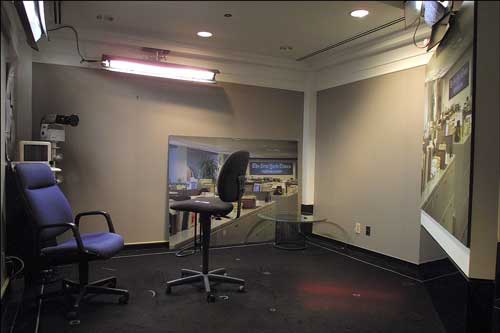
Photo of camera setup in the Times' D.C. bureau from Declan McCullagh Photography.

Thursday, April 13, 2006

Video next

If you ever wonder what the youth of America are up to when adults have their backs turned, just go to YouTube.com. Like MySpace, the site's aptly named--unlike the Friendster for kids site, though, YouTube--which lets anyone post self-created or 'found' video--will generally leave you shaking your head in admiration.

Hard to believe that a generation that can't spell and doesn't know there's another George Bush can produce such interesting and creative videos. Then again, it makes sense--adults are always surprised by what great things kids can do when left to their own devices, it's almost like we've forgotten what it was like to have oodles of free time and unlimited energy.

Adults are on YouTube too, of course, although most of what they post tends to be works created by other (more talented) adults, i.e. piracy. Then again, given I'd never have thought to have bought any of these videos even if I knew they existed, it's hard to see who's harmed.

Amazing things kids did-
-A school talent show, some freakily gifted kids: the Robot Video


-This is the new generation Asian American: Urban Ninja


-Classical music in the age of rock: Pachabel's Canon


-She's dangerous: Knife Skills


Great adult performances
-Video of Faye Wong, one of my favorite Chinese singers, singing Dreams by the Cranberries


-The Cranberries singing Dreams (it's a great song)


-Bob Dylan singing Girl of the North Country; may as well be from a different planet, it's so unexpectedly--authentic? innocent?


-A funny version of the Tokens' In the Jungle


-It'll break your heart, one of my favorite singers/songs: Iris Dement, Our Town

Ink and stick


Brazilian soccer player faces criminal racism charge

AP: Prosecutors on Wednesday charged a Brazilian soccer player with racism, a crime in Brazil, for insulting an opponent in a match last month.

Prosecutors in the southern Rio Grande do Sul state charged Juventude defender Antonio Carlos after TV images showed him shouting "monkey" during a state league match on March 5.

Antonio Carlos -- who previously played with Italy's AC Roma, Brazil's Palmeiras and Santos and Brazil's national team -- faces from one to three years in prison if found guilty.

Prosecutors said, however, the player can avoid a trial if he agrees to have 10,000 handbills made with the saying, "We are all equal," and "Say no to racism." He would have to help distribute the handbills during sporting events in the city of Caxias do Sul, where Juventude hosts its matches. Caxias is about 750 kilometers (465 miles) south of Sao Paulo.
This is... interesting. Either up to three years in prison--or distribute some handbills.

Wonder how many repeat offenders they get.

Photo of Antonio Carlos from Chilean newspaper La Tercera.

Wednesday, April 12, 2006

Latin to Greek


They feature Southerners at the top, hopefully this is the last we see of them.

10:33 p.m., the frat boys take off first--for Rome, on 8 a.m. train. Five minutes later the hippies get going. Then Joseph/Monica, few hours later, talk about how up and down they've been. Fran/Barry a few minutes later.

Frat boys get to train station, then hippies. Lake/Michelle leave a bit after midnight, ugh. And they start yelling at each other right away, he's just a jerk, swears at her. Ray/Yolanda are last, at like 1 a.m. But it's all good, big reunion at the station, which doesn't even open until 4 a.m.

They arrive in Rome, some cab, others take the subway to Trevi Fountain. Ray/Yolanda suck at train station, somehow. Frat boys at fountain already, find guy on scooter, now gotta go find horse carriages a mile away at Spanish Steps, a bit of a Da Vinci code commercial, it's like a puzzle/code. Dumb.

Why are frat boys so much faster than everyone else? J/M just getting to fountain, Metro riders are who knows where. Hippies are 3rd, then Southerners, then old people, than R/Y. Frat boys at steps, off they gotta go to Athens. Crack code, just says bring these papers to the pit stop. Not much of a code, put one sheet of paper over the other.

Everyone's bunching behind the frat boys at the steps, and cracking the code, then taking cabs to the airport. Frat boys at the airport first, get on 7:25 p.m. flight. J/M, hippies right behind them, then Southerners. Everyone's on the same flight; old people next, then R/Y--all on Olympic Air. Land, off to the Agora via cabs. Quite a happening leg, no commercial yet. Wow, for once frat boys near last--ooh, hippies are last. But Agora doesn't open until 8 a.m.; in a pouring rain everyone's looking for the clue box, some running, others content to let others find.

J/M get there first--a fast forward. Go to a restaurant, break plates until they find a marker, one out of hundreds of plates. J/M do it; R/Y take train to Isthmos Station, like a hundred plus miles away by train. Frat boys go for FF too, old people too. Southerners to train, hippies too. Wind up helping out R/Y with bus directions. Frat boys show up second at restaurant, pure luck at this point--and the frat boys get it. Off to Fortress of Rion, on coast. They waste some time smashing rest of plates. Old people get to restaurant, frat boys gone already. Ugh.

Southerners on train, hippies and R/Y catch it just in time. J/M having trouble getting a cab, say they're out of it. J/M squabble a bit on train to station, he lectures her. Old people taking cab, blame falling behind on not being able to run fast enough. Monica's crying at station, Joseph says it'll be okay; old people show up, they're on same train.

Nice view out at coast; hippies happy, white trash man says not as pretty as Italy. They apparently all get off train at wrong place, wind up taking bus. Get there together, roadblock: bungee jumping. Second group of couples get off at the right station, old woman says she'll do roadblock, then doesn't wanna do it, scared. Nice camera shots. R/Y go first, for once, off they go after Ray jumps. Detour: either Herculean effort--three ancient Olympic events, discus/javelin/wrestling. Or It's All Greek to Me--look for nine pieces of pottery, translate Greek letters to English, spell out city.

R/Y have a map (good), drive off. Hippies jump, they love it. Hmm, frat boys are really gonna have a huge lead. Hippies do Olympics. Southerners jump, he's cheering for her for once, doing Olympics too. J/M get there, she jumps, loves it, doing Olympics. Fran is totally scared, and is just standing there, freaking out, very loudly too.

Back from break, she jumps, is totally terrified. But does it, doesn't look happy afterwards. They do pottery. Southerners discover their map is all in Greek, he's cursing at her, they start freaking out. Idiots. Frat boys driving, pit stop already, and they're done. For cracking the code and being first, they get to attend Da Vinci Code premiere.

R/Y get to Olympics first. She tosses discus, pathetically, but good enough. Hippies may be lost... they're cool about it. Southerners are just yelling at each other. J/M get to Olympics as Ray's throwing javelin, he's having trouble. Quite a bit of trouble. As is Joseph, once they get there. Old couple just jamming with pottery. Southerners lost. Southerners stumble across letter thing, start picking things up. Hippies are totally lost. Into gas station, turns out they've been going the wrong way for--hours. They're like this is it, we're done; but civil about it. Oh no, the show's over if these guys are out....

They're apologizing to each other, back they go. Joseph gets javelin first, then Ray has more trouble. Old people get help translating word. Southerners are yelling at each other, per always. Joseph wrestles guy, they have to get him out of circle--through dumb luck he does. Off to pit stop, 107 miles by car... man, hippies are lucky this is probably a non-elim round. Ray finally makes javelin. They get wrestler out working together, currently in third. But then ask for where fortress is, woman says Patra, he looks on map, sees Petra. Ugh.

Southerners are just screaming at each other, this is not a good task, requires brainwork. Old people find city pretty quickly, off the go in 4th. Southern chick gets it, husband doubts it but then says good job. They're off driving, randomly; old people smash into tree, back window's destroyed. Ask for directions, in the right way. Olympics for hippies, wasting time celebrating. Southerners going the wrong way; she forces him to stop and breath, he's freaking out. Hippies get werstler out, after a while. They get directions.

Everyone's driving; R/Y get there second--that's amazing. They're not overly celebrating; get a penalty for not following clue correctly, 15 minutes for taking bus to train station, along with the other teams. J/M next, they wind up 2nd in actuality. R/L 3rd by a little bit. Southerners are giving up, driving. Hippies think they're last too. Old people are--where? Team #4. Hippies get there, astonishingly enough, before hated white trash. They're totally shocked.

Southerners show up last, just giving up coming out of car--hippies beat them even with penalty. Big kiss for Phil from both of them. Lake and Michelle are last. And are eliminated. He says they got along great most of the time; stressful times and you wanna blame your partner. She says afterwards their relationship works for them, they're getting by the best they can. Ugh.

Oh-oh, Ray and Yolanda are yelling at each other--off to the Middle East, hippies look like they're still behind too. Oh-oh.

Photo of Lake and Michelle from Amazing Race website.

Bad Day upside down


'Idol' turns 'Bad Day' into anything but

USA Today: Bad Day may be a sad sendoff for bounced American Idol finalists, but for viewers, it's bouncy good fun.
Daniel Powter's piano-driven pop tune has been the sonic backdrop for Wednesday departures of singers voted off the competition (Fox, tonight, 8:30 ET/PT). With coveted exposure on TV's ratings blockbuster, Bad Day is No. 1 on Billboard's pop chart and the nation's top digital track with 467,000 downloads sold.

"It grows on people. Everyone can sing it, and it's easy to whistle," Powter says. "I'm sure American Idol is a huge reason the song is what it is. I'm thankful, because it's getting my music out there."
It's totally an infectioous song; and the video's great too.

Kindof puts a smile on your face, no matter what sort of day you've been having.

Daniel Powter photo from Warner Brothers via USA Today.

Detroit makes history (?)


At the end of the day on Saturday, April 8, the Detroit Tigers at 6-0 had the best record in baseball. At the same time, the Detroit Pistons had the best record in basketball, and the Detroit Red Wings had the best record in hockey.

I'm not sure, but I don't think that's ever been done before. The hard part of the triple crown is basketball and hockey, which are both almost done with their seasons when baseball is just starting.

I know no team has ever won championships in both hockey and basketball the same year; I think the Pistons and Red Wings will set that record this year, but even if that doesn't happen, Detroit's already had a heck of a sports year.

Now if only those Lions could get with the program....

Team logos from LogoServer and sportslogo.net (since official team websites don't have them).

Repeating history


An Iranian Missile Crisis?

David Ignatius in the Post: The emerging confrontation between the United States and Iran is "the Cuban missile crisis in slow motion," argues Graham Allison, the Harvard University professor who wrote the classic study of President John F. Kennedy's 1962 showdown with the Soviet Union that narrowly averted nuclear war. If anything, that analogy understates the potential risks here.

What worries me is that the relevant historical analogy may not be the 1962 war that didn't happen, but World War I, which did. The march toward war in 1914 resulted from the tight interlocking of alliances, obligations, perceived threats and strategic miscalculations. The British historian Niall Ferguson argued in his book "The Pity of War" that Britain's decision to enter World War I was a gross error of judgment that cost that nation its empire.

Zbigniew Brzezinski, a former national security adviser to President Jimmy Carter, makes a similar argument about Iran. "I think of war with Iran as the ending of America's present role in the world," he told me this week. "Iraq may have been a preview of that, but it's still redeemable if we get out fast. In a war with Iran, we'll get dragged down for 20 or 30 years. The world will condemn us. We will lose our position in the world."

Brzezinski urges President Bush to slow down and think carefully about his options -- rather than rushing to stop Iran's nuclear program, which by most estimates is five to 10 years away from building a bomb, even after yesterday's announcement. "Time is on our side," says Brzezinski. "The mullahs aren't the future of Iran, they're the past." As the United States carefully weighs its options, there is every likelihood that the strategic picture will improve.
Brzezinski knows of what he speaks; he was Carter's security adviser during the Iranian hostage crisis. His quote about war with Iran ending our present role in the world is pretty chilling, but probably accurate.

Ignatius, on the other hand, is wrong to expand upon Allison's comparison to the Cuban missile crisis. When Iran has scores of nuclear-tipped missiles pointed at us from 60 miles away and the might of a superpower's arsenal backing it, then the analogy might fit.

It's interesting for a confrontation over nuclear weapons that Ignatius, like some other commentators and reporters, have pointedly ignored or else buried the section of Seymour Hersh's article that reveals:
One of the military’s initial option plans, as presented to the White House by the Pentagon this winter, calls for the use of a bunker-buster tactical nuclear weapon, such as the B61-11, against underground nuclear sites.
Throwing the word tactical in front of nuclear does nothing to change the fact that it's a Hiroshima and Nagasaki-like attack that the U.S. is contemplating. It won't result in the deaths of as many civilians, but that's entirely due to the Iranian government's refusal to use civilians as shields the way Saddam Hussein did.

The U.S. and Israel and Europe want to keep Iran from getting nuclear weapons in 5-10 years because we fear they may use it against Israel. So to do that, we're going to use nuclear weapons against Iran?

In terms of logic and planning, that's more Bay of Pigs than anything else.

Image of Cuba's Bay of Pigs stamp in various places on the Web.

Tuesday, April 11, 2006

Yellowface


Seeking Ancestry in DNA Ties Uncovered by Tests

Amy Harmon in the Times: Alan Moldawer's adopted twins, Matt and Andrew, had always thought of themselves as white. But when it came time for them to apply to college last year, Mr. Moldawer thought it might be worth investigating the origins of their slightly tan-tinted skin, with a new DNA kit that he had heard could determine an individual's genetic ancestry.

The results, designating the boys 9 percent Native American and 11 percent northern African, arrived too late for the admissions process. But Mr. Moldawer, a business executive in Silver Spring, Md., says they could be useful in obtaining financial aid.

"Naturally when you're applying to college you're looking at how your genetic status might help you," said Mr. Moldawer, who knows that the twins' birth parents are white, but has little information about their extended family. "I have three kids going now, and you can bet that any advantage we can take we will."

Genetic tests, once obscure tools for scientists, have begun to influence everyday lives in many ways. The tests are reshaping people's sense of themselves — where they came from, why they behave as they do, what disease might be coming their way.

It may be only natural then that ethnic ancestry tests, one of the first commercial products to emerge from the genetic revolution, are spurring a thorough exploration of the question, What is in it for me?
Ah, yes--it's only natural for white people to wanna become Native American, or Hispanic, or Asian American, when they want to, then go back to being white when they get tired of it....

It's an astonishing article. Not just the content, but the style--it's written as if there's no other side. Not that it's surprising anymore that the New York Times is tin-eared when it comes to race.

The worst thing about the article is the Times tries to present examples of 'the other side', like a black woman who uses DNA tests to confirm her Scottish heritage to claim a castle. Does the Times not understand that in a court of law, a descendant is a claim of fact that does not depend on when it came to your attention what your heritage is.

But when it comes to affirmative action programs, someone who's lived as a white person and is minimally a person of color is lying when they represent themselves as a person of color for the 2 seconds it takes to check a box.

Besides which, it's like when whites tag affirmative action programs reverse discrimination. No, reverse discrimination would be if blacks enslaved whites for 200 years. It's not a two-way street; in 21st century America you don't need to know anything culturally or go through anything societally to be generically white. You can't say the same if you're Asian American or Hispanic or African American.

It actually is why I feel bad for white Americans, but that's another day's post. I think the funniest part of the article, actually, is this girl:
"If someone appears to be white and then finds out they are not, they haven't experienced the kinds of things that affirmative action is supposed to remedy," said Lester Monts, senior vice provost for student affairs at the University of Michigan, which won the right to use race as a factor in admissions in a 2003 Supreme Court decision.

Still, Michigan, like most other universities, relies on how students choose to describe themselves on admissions applications when assigning racial preferences.

Ashley Klett's younger sister marked the "Asian" box on her college applications this year, after the elder Ms. Klett, 20, took a DNA test that said she was 2 percent East Asian and 98 percent European.

Whether it mattered they do not know, but she did get into the college of her choice.

"And they gave her a scholarship," Ashley said.
She thought being Asian American would help her get into college?!

I guess one problem with pretending to be something you're not is how telling your ignorance can be. Bet Ashley never thought reading an article like this would be of any relevance to her: Ending College Admission Quotas Against Asian-Americans.

Image of an unspecified monkey from various places on the web.

All the Queen's subjects


It's Queen night on American Idol--and I assume only Chris is happy. Am sure this show can survive three bad Tuesdays in a row, only question is whether some of the more fragile contestants will.

Opening tape shows original Queen performing We Are the Champions, We Will Rock You, and Bohemian Rhapsody--and what else? I guess we'll find out. They show Idols walking in and greeting band, so odd. Hmm, Kellie looks pretty good in previews; Taylor seems to be having a good time too.

Bucky up first; band says he's got a good attitude, is a good performer. Doing Fat Bottomed Girls... okay. In leather, wow, he's actually pretty good from the start, song fits his range. Drops some words, and enunciation is a problem as always, but very good choice. He's oozing confidence, growing into that Bo role more every week. Voice isn't that great, but not bad at all. Randy says good energy, bit pitchy but liked it. Paula says interesting that you kept true to who you are, it worked. Simon says good song choice, overall quite mediocore... hmm, Simon's back to trying to shape the show.

Ace up next, in striped shirt and leather pants. And more make-up than usual. Ryan talks to him before, he admits being outof his comfort zone this week. And him giving them an idea for the arrangement, and the band saying they don't think they're gonna play it that way. We Will Rock You. Another good song choice, he's just up there chanting though--letting the beat of the song carry everywhere along. Hmm, actually gets worse as he goes on; not really much you can with the lyrics, crowd not that into it. Not sure after all it was a good song to do, kindof boring. Randy says like a 5 or 6, just karaoke, didn't get it. Paula struggles to say she like he tried doing something different, took a risk. Simon says it was a complete and utter mess, it didn't work, you were forgetting the words, Randy was being kind--Randy chimes in yeah; Simon says he really hated it. Ace tells Ryan he thinks he rocked, dodges his questions about was it uncomfortable with Queen rejecting his ideas.

Kellie says her dad listened to Queen, band says she did pretty good with Bohemian Rhapsody, but a tough job ahead of her. In black leather outfit, heavy racoon mascara. Hmm, very different interpretation; interesting look/feel to it, her personality is really starting to come out, especially the theatrical side. Actually I really like it, she's totally performing, no fear at all, totally in control, totally transfixed watching her. Wow, one of the best things I've seen this year on this show, she totally nailed it. Randy says at first he was worried but you worked it out, was entertained. She's totally blossoming. Paula says good job. Simon says you're very brave, started weird but although it should've been hideous on paper, he liked it.

Well, if Chris doesn't rock this, the world's upside down. Doing an obscure song, Innuendo, band loves him, says he's got a real rock sensibility. In black shirt/black jeans. Song is pretty unmelodic, but he looks right doing it, just rips it out. Audience kindof not into it. Hard song to judge--totally unenjoyable, but I guess he did it about as well as you can. Randy is like I've been one of your fans, you didn't disappoint, you delivered. Paula liked it too, trips over herself trying to say to compliment him. Simon says they don't perform that song live cause it's not a very good song; best vocal, most believable, but disappointed because you didn't decide to entertain the audience at home, you could've had a moment tonight--but once again, too indulgent.

Next, Katharine, in a hideous red satin top and big black belt and pants--what a weird look. Don't Stop Me Now, band says she has a lot of joy/bounce in her; then changes her mind to Who Wants to Live Forever, to showcase her voice. Good start, very dramatic, all dark and slow. Ugh, then her voice is just all over the place in the middle, just off--powerful, but not pleasant to my ears. Big but yowling. A big miss for me, let's see what her judges think. Randy is like it's good to hear you go back to your element--a bit pitchy, and a bit too big for you at spots, but overall good. Paula says nothing, glorious voice, good job. Simon says you almost had a big moment, lightning director made you look good; overall one of the strongest tonight although some pitchy moments. Well, he's back lobbying for her.

Next Elliott, in shiny tan shirt and jeans, Ryan asks him beforehand about what he did pre-Idol; Somebody to Love, which he'd never heard before this week. Uh, okay... band tells him written with Aretha Franklin in mind. Say it's a hard song, but he did a good job. Ugh, totally not believable with this song, and is like off from the get-go. I think he's gone after this week--his voice is like thin, and rushed, and the whole thing just doesn't work. Wow, totally yowling in the middle. Whatever happened to sweet-voiced Elliott? It's like he's pushing so hard, has just gone off the deep end. Randy says probably the hardest song so far, some pitchy problems, but overall loved it, really dope. Paula says the best vocal tonight, great performance. Simon says you chose the tough one, kindof in and out performance, overall you probably pulled it off. Hmm, okay; don't agree.

Taylor sang We Are the Champions with the band, then decides to change it, to A Crazy Little Thing Called Love. Band liked his vocals on original, but he wants to dance. In shiny gray suit. And off he goes, kicks down the mike stand on his second try. Didn't even know this was a Queen song. Vocal just okay, but he's kindof entertaining. Bit too conscious at this point of his own appeal--none of the magic energy outof nowhere of his earlier days. Oh well. Randy is like welcome back, crazy man. Paula says you did an old song in a refreshing way. Simon asks him if he's drunk, says he thought it was ridiculous.

Paris closes, in black bustier-type outfit. Band says she's damn good, doing Show Must Go On. She loved being on stage; band says he likes everything about her. Yaay. Looking very adult in her look, and attitude. It's all dress-up; reminds me of Tina Turner. Powerful voice, slow and strong. But kindof a disjointed performance, never really got into it for some reason--song may be some of it, crowd reaction is a bit desultory. Overall, I always like her, but not sure about song choice--but she did seem to perform it well. Randy is like started out a bit rough, but you worked it out baby. Paula says everyone is finding out what a powerhouse you are. Simon says he thought it was all a little weird, and that's it. Uh-oh... too bad Queen's not voting.

Really enjoyed Kellie's performance, looking back on it. Fear for Paris.

Kellie, 3
Bucky, 1
Chris, 4
Taylor, 7
Paris, 8
Katharine, 5
Elliott, 6
Ace, 2

Screen grab of Paris by by C. Gomez via Flikr.

Monday, April 10, 2006

Year-round madness


Bracketolitics: The Road to the Final Four: Gregg Easterbrook and Grady White put together a funny NCCA-inspired bracket; although they wimp out by not picking a championship game (Hillary vs. U.S. military) or winner (ground troops always win).

Photo of camouflage basketball found in various places online.